High-Pressure Common Rail Test Bench: 9 Essential Steps to Automate Diesel Injector Diagnostics
Modern diesel engines demand precision. With injection pressures exceeding 2,500 bar and injection durations measured in microseconds, traditional diagnostic methods simply cannot keep pace. The high-pressure common rail test bench has emerged as the indispensable solution—a sophisticated piece of equipment that isolates fuel system components from engine variables and delivers repeatable, data-driven diagnostics.
But what does the automated diagnostic process actually look like? Here are the 9 essential steps that transform a common rail test bench from a piece of equipment into a fully automated diagnostic powerhouse.
Step 1: Secure Injector Mounting with Brand-Specific Adapters
The diagnostic journey begins with proper physical installation. Modern test benches feature specialized clamping systems designed for specific injector brands and models.
Key Data:
- Supports injectors from Bosch, Denso, Delphi, Siemens, Caterpillar, and Cummins
- Multi-clamping systems reduce setup times for diesel tests
- Test benches can accommodate up to four injectors simultaneously for efficient batch testing
- Some advanced models support over 4,000 injector data sets for instant brand and model identification
Automation Feature: Once the injector is clamped, the system automatically identifies the injector type from its built-in database and recalls the appropriate test parameters—eliminating manual setup errors.
Step 2: Automatic Electrical Verification
Before any hydraulic testing begins, the test bench performs a comprehensive electrical verification of the injector. This step is critical because electrical faults can mimic mechanical failures.
Key Data:
- Tests both solenoid (electromagnetic) and piezoelectric injectors
- Capacitance measurement range for piezo injectors: 0 – 12 μF
- Response time measurements: 0 – 999 μS
- Solenoid valve drive current: 0 – 30A
- Injector opening voltage control: 12V, 80V, 150V with stage adjustment
Automation Feature: The system automatically measures coil resistance, inductance, and capacitance, comparing results against OEM specifications. A "pass/fail" verdict is generated instantly—without requiring operator intervention.
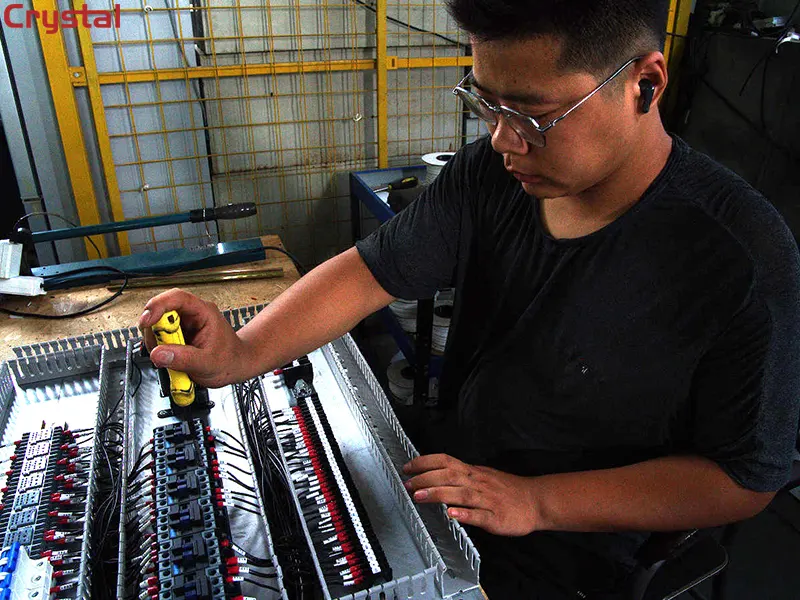
Step 3: High-Pressure System Build-Up and Stabilization
With electrical verification complete, the test bench builds hydraulic pressure using an integrated high-pressure pump. This step simulates the real-world fuel pressure that the injector would experience inside an engine.
Key Data:
- Pressure generation range: 0 – 2,600 bar (260 MPa)
- Pressure control accuracy: ±0.1 MPa (1 bar)
- Common rail pump: Bosch CP3.3 high-pressure pump
- Rail pressure closed-loop control with real-time measurement
- High-pressure protection system automatically engages above safe limits
Automation Feature: The system automatically ramps pressure to the target level, maintains it within ±0.1 MPa tolerance, and holds it steady throughout the test cycle. No manual pressure adjustments are required.
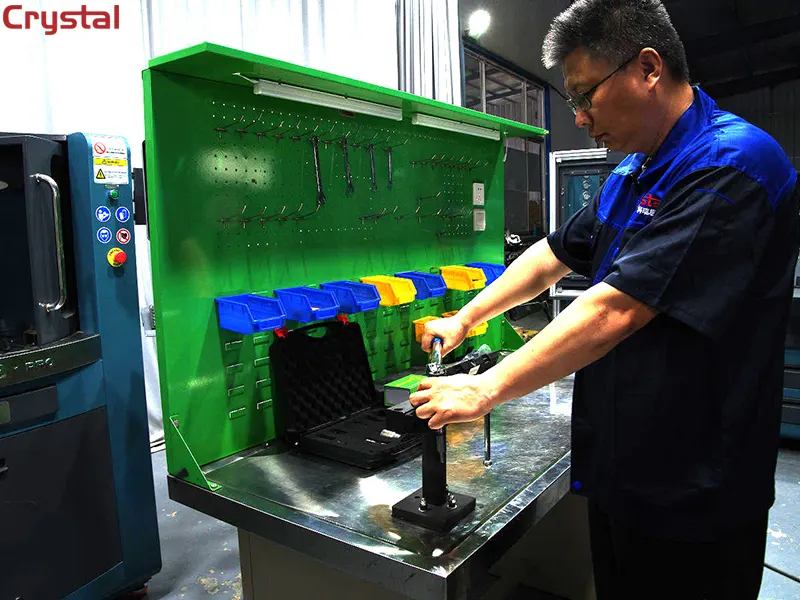
Step 4: Sealing Performance Test (Leakage Detection)
Injector sealing integrity is fundamental to engine performance. A leaking injector can wash lubrication from cylinder walls, leading to catastrophic engine failure.
Key Data:
- Test pressure range: 0 – 2,500 bar for sealing tests
- Sealing test performed under high-pressure conditions to simulate real operating environments
- Back leakage rate measured to quantify internal seal integrity
- Fuel escaping past worn components is precisely measured and compared against OEM tolerances
Automation Feature: The test bench automatically pressurizes the injector, holds pressure for a specified duration, and measures any pressure drop or leakage volume—generating an immediate pass/fail result.
Step 5: Idle and Low-Load Injection Testing
Modern common rail systems perform multiple injections per cycle—pilot, pre, main, and post injections. The test bench replicates these conditions across the full operating range.
Key Data:
- Injection duration range: 100 – 5,000 μs (microseconds)
- Injection frequency control: 0 – 1,000 Hz with 1 Hz precision
- Continuous injection count: 0 – 1,000 times with single-count precision
- Injection duration control: 0 – 65,535 μs with microsecond precision
- Idle, partial-load, and full-load injection cycles all automatically executed
Automation Feature: The system automatically sequences through idle, pilot, pre-injection, and main injection events—adjusting pulse width, frequency, and timing precisely as programmed.
Step 6: Flow Rate Measurement Across All Operating Conditions
Flow rate is the single most critical parameter in injector diagnostics. The test bench measures fuel delivery volume across multiple operating points.
Key Data:
- Flow measurement accuracy: 0.1 ml
- Flow measurement range: 0 – 4,000 ml/min
- High-precision gear flow meters for accurate, stable measurement
- Flow rate measured under multiple conditions: idle, partial load, full load, and pre-injection
- Test oil filtration precision: < 5 microns to prevent contamination
Automation Feature: The system automatically measures and records flow at each test point, comparing results against stored OEM specification data. The entire process—from pressure ramp-up to flow measurement—is fully automated.
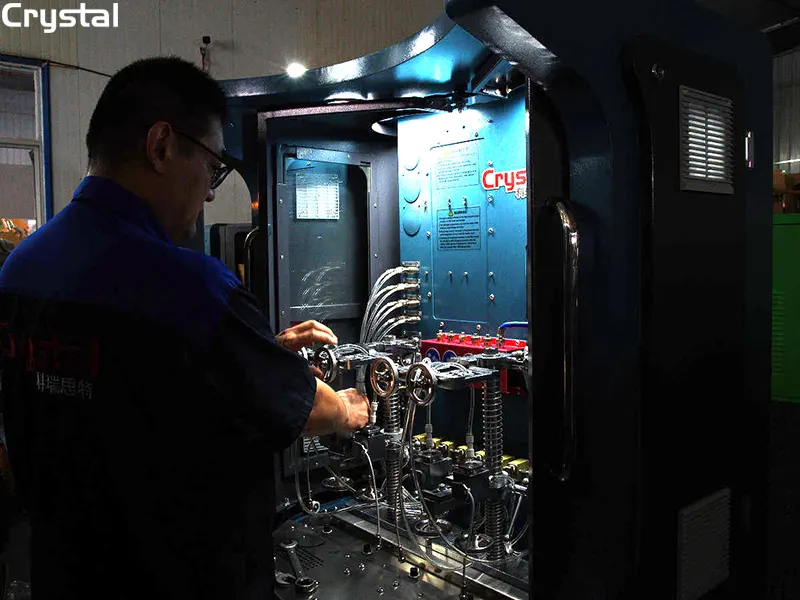
Step 7: Return Fuel (Back Leakage) Measurement
Return fuel measurement is often overlooked but provides critical insight into injector health. Excessive return flow indicates internal wear or seal failure.
Key Data:
- Return flow measured simultaneously with delivery flow
- Pre-injection return oil volume quantified separately
- Total fuel entering the injector determined by delivery + return flow
- Test conditions tightly controlled: oil temperature 40 ± 2°C
- Fuel pump rotation speed range: 0 – 4,000 RPM
Automation Feature: The test bench automatically measures both delivery and return flow during each test cycle, calculating the difference to identify internal leakage or wear patterns.
Step 8: Dynamic Response and Timing Verification
Injection timing precision is measured in microseconds. The test bench verifies that the injector opens and closes exactly when commanded.
Key Data:
- Response time measurement: 0 – 999 μS resolution
- Opening pulse width test: automatically measured and recorded
- Minimum Drive Pulse (MDP) testing to determine the shortest pulse that produces consistent delivery
- Electromagnetic valve dynamic inductance and response time automatically tested
- Percentage tolerances can be assigned to each test step individually
Automation Feature: The system automatically applies drive pulses of varying duration, measures the injector's electrical and mechanical response, and determines whether timing falls within OEM specifications.
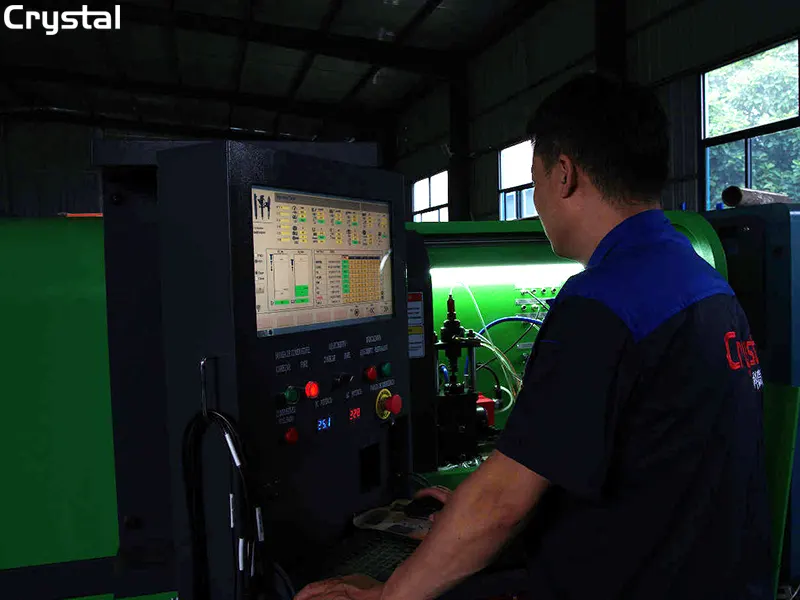
Step 9: Automated Report Generation and Calibration Coding
The final step transforms raw test data into actionable intelligence—complete with pass/fail verdicts and calibration codes for repair or replacement.
Key Data:
- Built-in database: over 7,600 injector data profiles
- Simultaneous display of up to 6 test data sets for easy comparison
- Automatic generation of calibration codes including: QR, IQA, IMA, ISA, c2i, c3i, and ICC (VD0)
- Test reports can be saved, printed, and exported
- System supports WIFI connectivity for remote diagnostics and software updates
Automation Feature: The test bench automatically compiles all test data, compares each parameter against OEM specifications, generates a comprehensive test report, and—when applicable—produces the precise calibration codes needed to reflash the injector for optimal performance.
Summary: The Power of Automation
| Step | Test Parameter | Typical Range | Accuracy |
| 1 | Injector Mounting | Multi-brand support | Automatic ID |
| 2 | Electrical Verification | 0-12 μF capacitance | 0-999 μS response |
| 3 | Pressure Build-Up | 0-2,600 bar | ±0.1 MPa |
| 4 | Sealing Test | 0-2,500 bar | Pass/Fail |
| 5 | Injection Timing | 100-5,000 μs | 1 μs precision |
| 6 | Flow Rate | 0-4,000 ml/min | 0.1 ml accuracy |
| 7 | Return Flow | Simultaneous measurement | High-precision gear meter |
| 8 | Dynamic Response | 0-999 μS | Microsecond resolution |
| 9 | Report & Coding | 7,600+ data profiles | QR, IQA, IMA, ISA, c2i, c3i, ICC |
The high-pressure common rail test bench has transformed diesel injector diagnostics from a manual, time-consuming process into a fully automated, data-driven science. By following these nine essential steps—each powered by precise, verifiable data—workshops can diagnose injector faults with confidence, reduce diagnostic time, and ensure that every repaired injector meets OEM specifications.
Written by
Taian Crystal Automation Co., Ltd.
Editor Chen
www.crystalautotest.com
WhatsApp:+86 185 9528 8526
Email:martin@crystalautotest.com
- Top 7 Factors to Choose a Reliable Common Rail Injector Test Bench for Diesel Repair Shops
- Top 6 Factors That Determine Injection Pump Test Bench Total Cost of Ownership
- 5 Features That Separate Entry-Level from Industrial Injection Pump Test Benches
- Top 6 Steps to Diagnose Injection Pump Test Bench Flow Rate Inconsistency

Crystal Automation is a leading Chinese manufacturer of common rail test benches and fuel injector test benches.