Top 7 Common Rail Injector Test Bench Maintenance Tasks to Minimize Machine Downtime
A common rail injector test bench is one of the most valuable assets in any modern diesel workshop. It validates injector performance, generates calibration codes, and ensures that every injector leaving your shop meets OEM specifications. But like any precision instrument, it demands consistent, methodical maintenance. Neglect it, and you risk inaccurate test results, costly rework, and—worst of all—unplanned machine downtime that erodes your workshop's profitability.
The math on downtime is unforgiving. Every hour a common rail injector test bench sits idle is an hour your technicians cannot bill for injector testing and calibration. For a workshop processing high volumes of common rail injectors, even a single day of unplanned downtime can translate into thousands of dollars in lost revenue—plus the reputational cost of delayed customer jobs.
The key to avoiding downtime is not reactive repair—it's preventive maintenance. Here are the top 7 maintenance tasks that every diesel workshop should perform on its common rail injector test bench to minimize machine downtime and maximize equipment uptime.
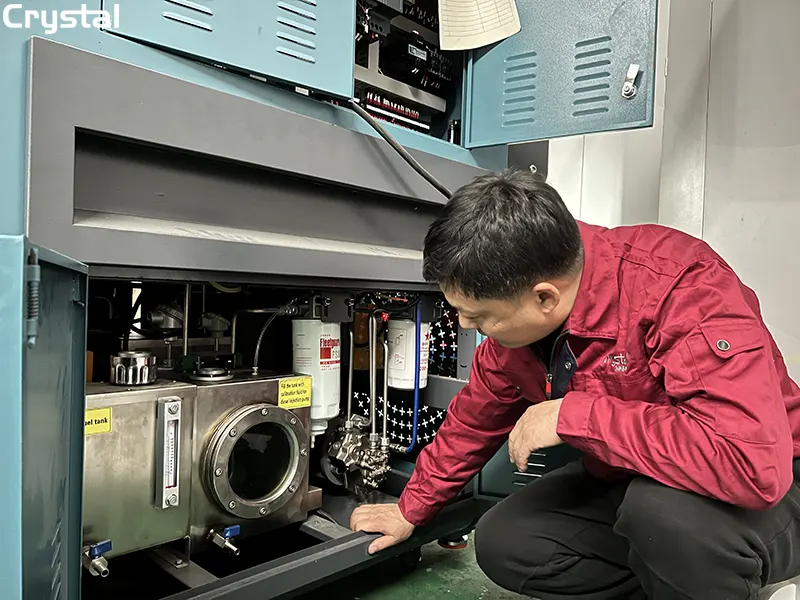
Task 1: Daily Test Fluid Level and Cleanliness Inspection
The foundation of accurate common rail injector testing is clean, properly leveled test fluid. Before each day's testing begins, inspect the test fluid level and visual cleanliness.
What to Check
- Fluid level: The test fluid should be maintained at the specified level in the tank—typically around three-quarters full
- Visual cleanliness: The fluid should be clear and free of visible contaminants. A cloudy grey appearance indicates contamination; a dark yellow but clear appearance indicates mixing with lubricating oil
- Leaks: Check for any visible fluid leaks around the tank, fittings, and injector mounting area
Why It Matters
Contaminated test fluid introduces impurities into the precision hydraulic circuit. These impurities accelerate wear on pumps, valves, and injector components, leading to inaccurate flow measurements and, ultimately, premature component failure. A single day of testing with contaminated fluid can cause damage that takes weeks to fully diagnose and repair.
Task 2: Weekly Filter System Cleaning and Inspection
The filter system is the first line of defense against contamination in the precision oil circuit. Weekly cleaning and inspection prevents clogged filters from restricting flow and causing pressure instability.
What to Check
- Oil circuit filter: Inspect for visible blockages or debris accumulation
- Filter element: Check for contamination, discoloration, or damage
- MGT strainer: Clean with a blower to remove accumulated debris
- Contaminated oil drainage: Drain oil that accumulates in the storage area under the mounting rail
Why It Matters
A clogged filter restricts flow to the high-pressure pump, causing pressure drops that directly affect test accuracy. In severe cases, a completely blocked filter can cause the pump to cavitate, leading to internal damage. Regular filter maintenance is far cheaper than pump replacement.
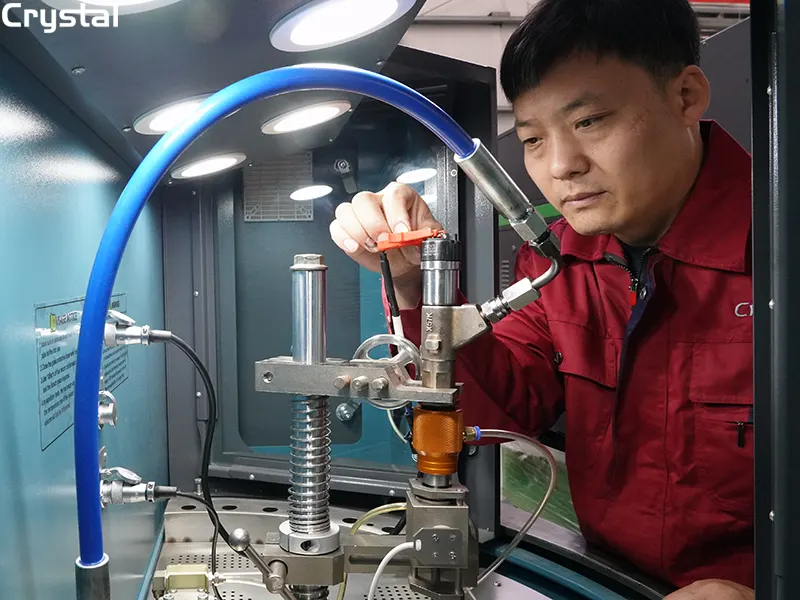
Task 3: Scheduled Test Fluid and Filter Replacement
Beyond daily and weekly checks, test fluid and filters must be replaced at scheduled intervals. Bosch specifies that test oil and the test oil filter must be replaced after testing 200 injection pumps, or at the latest every 2 months.
The Replacement Schedule
| Component | Replacement Interval |
|---|---|
| Test oil (ISO 4113) | Every 400 hours or 500 pumps |
| Test oil filter | Every 200 pumps or every 2 months |
| Hydraulic oil (first change) | After 200 hours |
| Hydraulic oil (subsequent) | Every 1,200 hours |
| Gearbox lubricating oil | Every 400 hours or 6 months |
Why It Matters
Old test fluid loses its lubricating properties and accumulates contaminants that damage precision components. Even if the fluid "looks clean," its viscosity may have drifted outside the ISO 4113 specification, causing flow measurement errors that are invisible until they affect a customer's injector.
Task 4: Monthly Pressure Verification and Calibration Check
Pressure accuracy is the foundation of every measurement on a common rail injector test bench. Monthly pressure verification catches calibration drift before it contaminates test results.
What to Check
- No-load pressure test: Compare pressure gauge reading against pressure sensor reading
- Deviation threshold: If deviation exceeds ±0.5 MPa, schedule calibration immediately
- Pressure decay test: Verify that the system holds pressure when the pump is stopped
Why It Matters
A deviation of just 0.5 MPa on a bench operating at 2,600 bar represents less than 0.02% error—yet it can produce flow measurement errors of 0.5–1.0 ml per 1,000 injections. That is enough to turn a passing injector into a failing one, or vice versa.
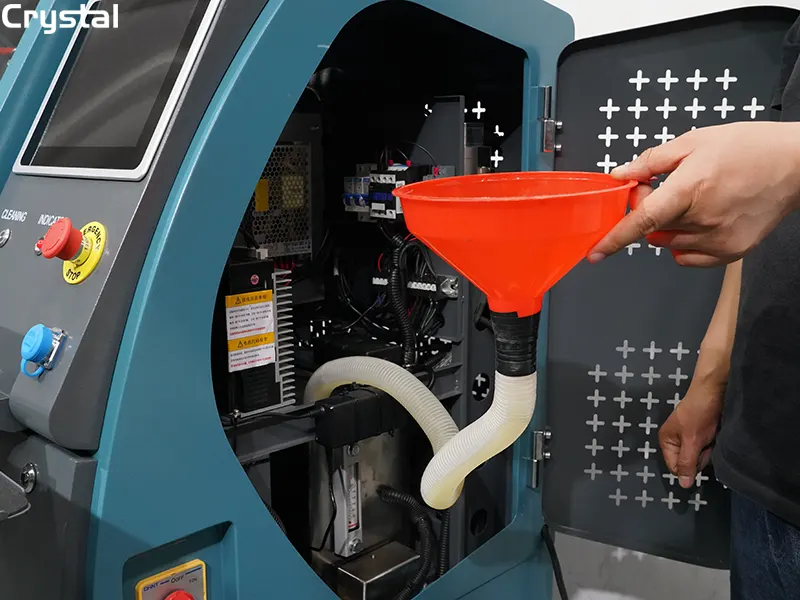
Task 5: Standard Injector Verification
Standard test injectors are the measuring stick against which every injector is evaluated. If the measuring stick is wrong, every measurement is wrong.
What to Check
- Opening pressure: Standard test injectors should maintain an opening pressure of 17.5 MPa
- Flow uniformity: Check flow uniformity across all standard injectors in the set
- Adjustment or replacement: If opening pressure deviates beyond 17.5 ± 0.2 MPa, adjust or replace
Why It Matters
A deviation of just 0.2 MPa in standard injector opening pressure can produce measurable differences in delivery volume—differences that propagate through every subsequent test. An injector that passes with a worn standard injector may fail in the engine.
Task 6: Electrical Connection and Sensor Inspection
Modern common rail injector test benches rely on precise electrical signals for injector actuation and measurement. Loose or corroded connections can cause intermittent faults that are difficult to diagnose.
What to Check
- Injector harness connections: Verify secure attachment and clean contacts
- Sensor cables: Check for damage, insulation wear, or loose connections
- Grounding: Verify ground resistance is ≤4Ω
- Control cabinet: Inspect internal wiring, contactors, and relays for signs of overheating or aging
Why It Matters
A loose connection can cause erratic test results that mimic injector faults. Technicians may replace a perfectly good injector because the test bench gave a false reading. Intermittent electrical faults are among the most frustrating and time-consuming problems to diagnose.
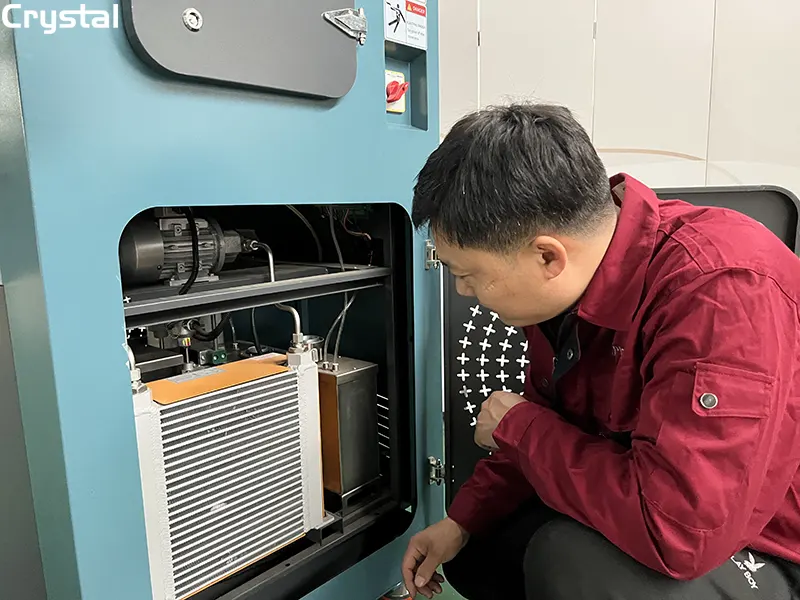
Task 7: Annual Professional Calibration and Full System Service
Beyond the routine maintenance your team performs, schedule professional calibration and full system service at least annually—or more frequently for high-volume workshops.
What Professional Service Includes
- Full system calibration: Verification of pressure sensors, flow meters, and temperature sensors
- Software updates: Installation of the latest test specifications and injector profiles
- Comprehensive diagnostic check: Verification of all sensors and actuators
- Validation against reference standards: Confirmation that the bench meets OEM specifications
Why It Matters
Even the most carefully maintained test bench will experience some calibration drift over time. Professional calibration restores the bench to factory specifications and ensures that test results are traceable and defensible.
Summary: The 7 Maintenance Tasks at a Glance
| Task | Frequency | Key Specification | Downtime Prevention Benefit |
|---|---|---|---|
| 1. Fluid level and cleanliness | Daily | Clear fluid, correct level | Catches contamination before damage |
| 2. Filter system cleaning | Weekly | Clean filters, clear strainer | Prevents pressure instability |
| 3. Fluid and filter replacement | 200 pumps / 2 months | ISO 4113 fluid | Prevents viscosity drift |
| 4. Pressure verification | Monthly | ±0.5 MPa deviation threshold | Catches calibration drift early |
| 5. Standard injector verification | Monthly | 17.5 ± 0.2 MPa opening pressure | Ensures accurate reference point |
| 6. Electrical inspection | Monthly | Secure connections, ≤4Ω ground | Prevents intermittent faults |
| 7. Professional calibration | Annually | Factory specifications | Restores full accuracy |
The Crystal Automation Maintenance Advantage
Crystal Automation's common rail injector test benches—including the CR918-PRO and CRS1000 series—are engineered to make these maintenance tasks easier and less time-consuming:
- 304 stainless steel fuel circuits resist corrosion and extend fluid life
- Three-stage filtration systems with 10-micron high-pressure filtration reduce contaminant-related wear
- Digital pressure displays enable quick visual verification without external gauges
- Integrated temperature control maintains fluid at 40 ± 2°C, reducing viscosity-related variability
- Built-in diagnostic software flags calibration drift and component wear early
- Comprehensive manuals and training resources document every maintenance procedure
Every Crystal common rail injector test bench is factory-calibrated and shipped with a comprehensive calibration certificate. Crystal's machines are exported to more than 100 countries, underscoring their reliability and the company's commitment to after-sales support.
Why Preventive Maintenance Beats Reactive Repair
The economics of maintenance are simple: preventive maintenance is always cheaper than reactive repair.
A fluid change costs a fraction of a pump replacement. A filter cleaning costs nothing compared to a day of lost testing revenue. A monthly pressure check takes minutes; recovering from a calibration failure that compromised a week's worth of test data takes days.
More importantly, preventive maintenance protects your workshop's reputation. A test bench that delivers accurate, repeatable results builds trust with customers. A test bench that produces inconsistent results—because of neglected maintenance—destroys that trust one comeback at a time.
Conclusion
Machine downtime on a common rail injector test bench is not inevitable—it is preventable. These 7 maintenance tasks—from daily fluid inspection to annual professional calibration—form a complete preventive maintenance program that keeps your bench running at peak accuracy and maximum uptime.
Follow them consistently. Document them rigorously. And choose a test bench—like Crystal Automation's CR918-PRO or CRS1000 series—that is engineered to make maintenance straightforward and downtime rare.
Because in diesel diagnostics, uptime is not just a convenience—it is the foundation of your workshop's profitability.
Written by
Taian Crystal Automation Co., Ltd.
Editor Chen
WhatsApp:+86 185 5385 2072
Email:martin@crystalautotest.com
- Top 5 Injection Pump Test Bench Market Trends Driving 5.7% CAGR Through 2031
- Best Injection Pump Test Bench Filter Cleaning Guide – 7 Tips to Prevent Circuit Contamination
- Injection Pump Test Bench Flow Accuracy: 7 Calibration Steps to Avoid Costly Errors
- The 10 Important Considerations for Troubleshooting High-Pressure Common Rail Test Benches

Crystal Automation is a leading Chinese manufacturer of common rail test benches and fuel injector test benches.