The 10 Important Considerations for Troubleshooting High-Pressure Common Rail Test Benches
High-pressure common rail test benches are high-precision, high-pressure electronically controlled fuel testing equipment. The core principles for troubleshooting are safety first, cleanliness as a foundation, standardized operation, accurate calibration, and long-term protection. These ten important considerations are crucial throughout the entire repair process, preventing safety accidents and secondary equipment damage. They are key to ensuring repair quality, reducing recurrence rates, and extending equipment lifespan.
1. Four Common Faults of High-Pressure Common Rail Test Benches
1.1. Oil Circuit/Pressure Faults
- Typical Symptoms: Abnormal pressure build-up, unstable pressure, oil leakage, abnormal noise, poor venting
- Key Diagnostic Points:
- Unable to build rail pressure: After startup, the rail pressure remains 0 or far below the set value. Prioritize low-pressure fuel supply failure, high-pressure pump damage, or pipeline blockage/leakage.
- Large pressure fluctuations and pressure drops: The rail pressure fluctuates wildly during operation, and rapidly depressurizes after shutdown. This is often due to aging seals, oil pipe leaks, or stuck pressure regulating valves.
- Overpressure alarm: Rail pressure continuously exceeds the standard range, accompanied by an alarm and shutdown. This indicates a malfunctioning rail pressure sensor or a stuck pressure regulating valve.
- External oil leakage/oil pipe joint leakage: Visible oil stains indicate seal failure, loose joints, or damaged oil pipes.
1.2. Electrical/Electronic Control Faults
- Typical symptoms: No power, screen error, no signal, components not moving, blown fuse
- Key diagnostic points:
- Complete machine cannot be powered on, black screen, indicator lights not illuminated: Indicates a fault in the main power supply, air switch, power cord, or main fuse.
- Screen appears normal, but oil pump/motor does not start, solenoid valve does not operate: Often indicates a break in the control circuit, relay, contactor, or wiring.
- Instrument reports fault codes, sensor values are abnormal (speed/pressure/flow displayed as 0 or fluctuating): Indicates sensor damage, open/short circuit in the wiring harness, or ECU module failure.
- Tripping or blowing fuse immediately upon startup: This indicates a short circuit, motor leakage, or component failure.
1.3. Mechanical Operation Faults
- Typical Symptoms: Abnormal motor noise, vibration, jamming, weak operation, or abnormal transmission.
- Key Diagnostic Points:
- Harsh noise and severe vibration during motor operation: Indicates bearing wear, motor phase loss, or loose/worn drive belt/coupling.
- The motor can rotate, but the high-pressure pump is overloaded and jams: This is often due to internal pump wear, stuck plunger, or mechanical seizure.
- Abnormally high operating temperature: Combining temperature rise and abnormal noise, indicates mechanical wear, poor lubrication, or overload.
1.4. Test Data Faults
- Typical Symptoms: The equipment operates normally with normal pressure, but the fuel injection test data is inaccurate and has poor repeatability.
- Key Diagnostic Points:
- Large deviations in fuel quantity and injection pressure data after multiple tests with the same injector: Indicates a malfunctioning flow sensor, a faulty metering system, or residual air in the fuel line.
- Compared with standard samples, overall test results are too high/too low: This indicates uncalibrated sensors, missing calibration parameters, or worn metering components.
- Abnormal injection timing and frequency: This indicates abnormal speed signal, drive module, or timing control program malfunction.
2. Standard Step-by-Step Troubleshooting Process
2.1. Visual Inspection + Basic Check (Prioritize)
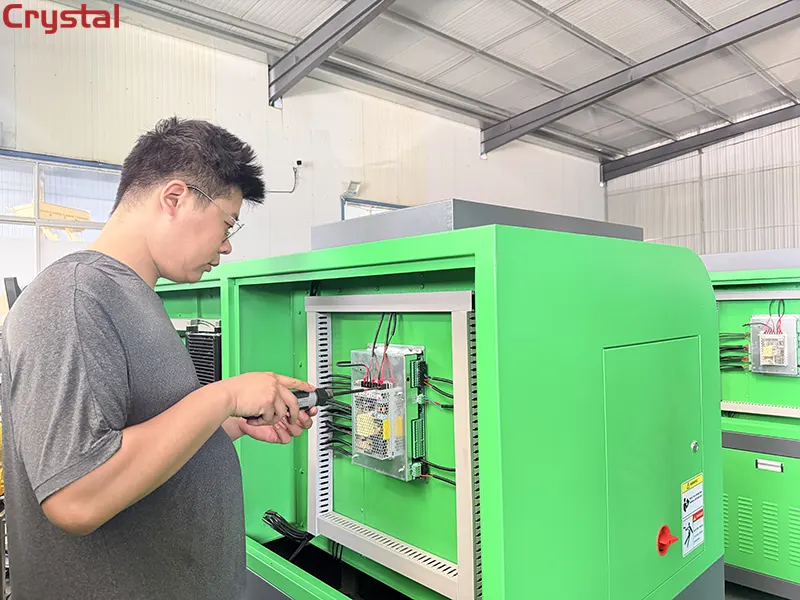
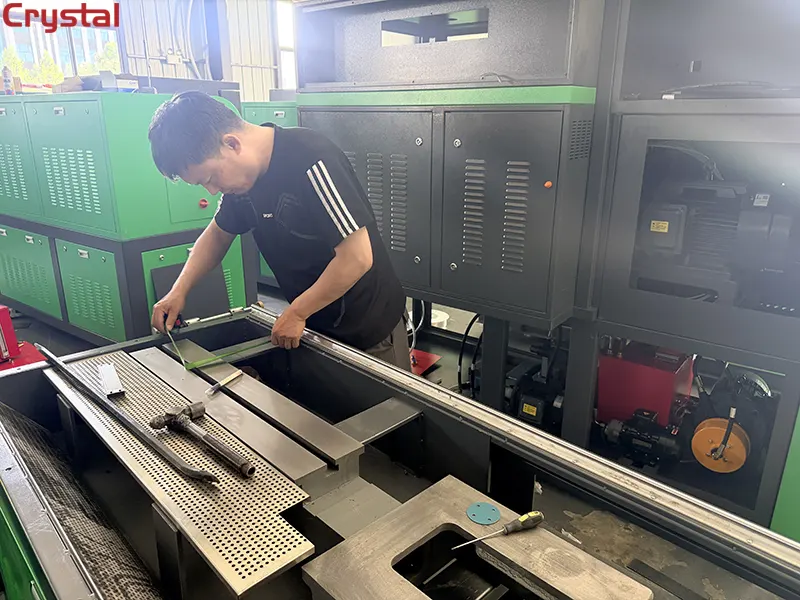
Check for oil leaks, damaged wiring, loose plugs, blown fuses, and tripped switches; listen for abnormal noises and check motor/pipeline temperature rise to initially differentiate between mechanical, hydraulic, and electrical problems.
2.2. No-Load Power-On Test
Start the equipment under no-load and observe the display parameters, indicator lights, and the operation of each motor/solenoid valve. No operation → electrical fault; erratic parameter fluctuations/errors → sensor/electronic control fault; normal operation before proceeding to load testing.
2.3. Low-Pressure Oil Circuit Test
Check the low-pressure oil supply pressure and oil circuit venting. 1. Insufficient low-pressure oil supply or air intake → Low-pressure oil circuit fault; Normal low pressure but still unable to build up pressure → Points to high-pressure system.
2.4. High-Pressure Load Test
Gradually increase the rail pressure, observing pressure stability, leaks, and alarm messages. Abnormal pressure → High-pressure pump, pressure regulating valve, or rail pressure pipeline fault; Normal pressure but inaccurate test data → Metering/calibration fault.
2.5. Component Isolation Test
Disconnect the injectors, external sensors, and external wiring harnesses one by one, segment by segment: Differentiate whether the fault is caused by the main unit, external tooling, or the component under test.
3. Troubleshooting Precautions
The core of troubleshooting high-pressure common rail test bench faults is to first depressurize and disconnect power, prevent static electricity and high pressure, use genuine spare parts, and calibrate before putting it back into production. Below are ten essential precautions covering safety, operation, calibration, and daily maintenance.
3.1. High-pressure systems must be depressurized first; disassembly and assembly under pressure is strictly prohibited.
- After shutdown, wait at least 15 minutes until the rail pressure has completely dropped to 0 bar before disassembling high-pressure fuel lines, injectors, common rails, and other components.
- Never loosen connectors while the system is pressurized; high-pressure fuel injection (up to 1600 bar) can cause serious injury or fire.
3.2. Completely disconnect and discharge power before maintenance to prevent electric shock.
- Turn off the main power supply and unplug the connector, ensuring complete power disconnection; use a special tool to discharge large internal capacitors (such as power filter capacitors) to avoid residual high-voltage electric shock.
- Control circuit connectors can only be plugged in and unplugged when the power is off to prevent damage to the ECU or drive module.
3.3. Use anti-static measures throughout to protect precision electronic components.
- When repairing electronic control components (ECU, sensors, drive boards), an anti-static wrist strap must be worn and reliably grounded; an anti-static mat should be placed on the workbench.
- Never touch circuit board pins or chips directly with your hands; static electricity can instantly damage CMOS chips.
3.4. Use only specialized tools and genuine spare parts; avoid mixing or substituting.
- Disassembling and assembling high-pressure components (injectors, fuel pumps) must be done using manufacturer-specified specialized tools. Do not use excessive force or tighten with ordinary wrenches.
- Replacing core components such as injectors, high-pressure fuel pumps, and rail pressure sensors must use original or certified genuine parts with completely matching models. Inferior aftermarket parts are strictly prohibited.
3.5. Maintain high cleanliness of the fuel system; prevent impurities from entering.
- Clean the workbench and tools before maintenance. Immediately seal all oil ports and connectors with clean plugs/plastic wrap after disassembly to prevent dust and impurities from entering the fuel system.
- Clean oil pipes and connectors with a specialized cleaning solution before assembly, and blow them clean with compressed air to prevent fiber and metal shavings from remaining.
3.6. Strictly verify electrical wiring to prevent incorrect connections and short circuits.
- Before disassembly, take photos to record the wiring harness routing, connector numbers, and screw locations. Label key areas.
- When reassembling, strictly follow the original wiring diagram/instruction manual. Sensor and actuator plugs are designed to be foolproof and cannot be forced in; incorrect connections can directly burn out the ECU.
3.7. Replace seals only after installation; never reuse.
- High-pressure fuel line seals, injector O-rings, common rail gaskets, and other seals must be replaced after disassembly; old parts cannot be reused.
- During installation, lightly apply a small amount of clean diesel fuel to the seal surface for lubrication. Do not use engine oil or grease to avoid contaminating the fuel system.
3.8. Bleeding must be performed after maintenance, followed by gradual pressure increase testing.
- After assembly, manually bleed the fuel at low pressure first, then start the low-pressure pump and run it at low speed until there are no air bubbles in the fuel line and the fuel return is smooth.
- After bleeding, slowly increase the pressure, testing gradually from low pressure to medium pressure to high pressure. Check for leaks, abnormal noises, and alarms at each stage.
3.9. Regularly Calibrate Sensors to Ensure Testing Accuracy
- Rail pressure sensors, speed sensors, flow sensors, etc., must be calibrated annually or after every 3 maintenance visits, using standard oil samples and standard injectors for comparison.
- Calibration data should be archived for future reference. If the test result deviation exceeds ±2%, the sensor should be recalibrated or replaced.
3.10. Maintain Maintenance Records and Strengthen Daily Maintenance
- Record each maintenance visit in detail: fault symptoms, cause, replaced parts, calibration data, and maintenance time. Establish an equipment file.
- Daily maintenance: Replace the fuel filter every 30 tests; check fuel line joints and seals weekly; clean the cooling fan and sensor plugs monthly.
4. Daily Procedures to Reduce Fault Frequency
4.1. Strictly Follow Start-up/Shutdown Procedures
When starting up, first check the fuel system, power supply, and joints. Preheat under no-load for 3–5 minutes before loading and testing. When shutting down, first depressurize and unload the equipment. Only disconnect the main power supply after the equipment has completely stopped. Emergency shutdowns and power-offs while the equipment is under pressure are strictly prohibited.
4.2. Strictly Prohibit Over-Parameter Use
Do not exceed the equipment's rated rail pressure, speed, or continuous operating time. Do not forcibly test injectors/pumps that exceed specifications to avoid high-pressure overload and module burnout.
4.3. Standardized Disassembly and Assembly Operations
Use specialized tools for disassembling and assembling high-voltage components and wiring harnesses. Do not use excessive force or pull on connectors. Seal oil ports promptly after disassembly to prevent debris from entering the oil circuit.
4.4. Designated Personnel for Use
Operators must be trained and licensed to operate the equipment. Do not arbitrarily change system parameters, calibration data, or wiring connections to avoid parameter errors that could cause test malfunctions.
5. Methods for Protecting Core Oil Circuit Components
5.1. Use Dedicated Standard Test Oil
Use only the diesel oil/test oil specified by the equipment. Do not mix waste oil, inferior diesel oil, or recycled oil. Replace the entire tank immediately if the oil deteriorates or turns black.
5.2. Replace Filter Consumables on Time
Replace low-pressure and high-precision fuel filters according to usage frequency (routinely every 30-50 cycles). Clogged filters directly lead to insufficient fuel supply and difficulty in pressure build-up. Regularly clean sediment from the bottom of the fuel tank.
5.3. Keep Fuel Clean
Use a dedicated filter funnel for refueling. Ensure fuel tanks and containers are properly sealed to prevent rainwater, dust, and moisture from entering the fuel. Moisture can cause corrosion of high-pressure components and plunger jamming.
6. Component Control and Spare Parts Management
6.1. Uniform Replacement Cycle for Seals
High-pressure fuel line seals and fuel lines are wear parts. Replace them in batches according to usage time, rather than waiting for leaks, to prevent repeated leaks and secondary failures.
6.2. Prioritize Genuine Parts
When replacing core components such as sensors, high-pressure pumps, solenoid valves, and wiring harnesses, use genuine or certified parts. Inferior parts have poor compatibility and a very high failure rate.
6.3. Properly Store Idle Equipment
When the equipment is to be shut down for an extended period, drain any residual oil from the pipelines, seal all oil ports and interfaces, disconnect the power supply, and properly wrap it for dust and moisture protection. Run it briefly for 5 minutes each month.
7. Summary
During the initial maintenance phase, strict safety protocols must be followed, and high-risk operations must be avoided. Strictly adhere to the procedures for power disconnection, capacitor discharge, and system depressurization. Disassembly or assembly of equipment components under pressure or electricity is strictly prohibited to prevent accidents such as high-pressure fuel injection and electric shock. Simultaneously, implement anti-static protection to prevent electrostatic discharge from damaging precision electronic control components, thus mitigating safety risks and electronic control malfunctions at the source.
During maintenance, focus on cleanliness and assembly specifications; these are crucial for reducing oil circuit and sealing failures. Throughout the entire process, maintain the cleanliness of the oil circuit. Promptly seal any disassembled pipe connections to prevent impurities and dust from entering the oil circuit and causing component wear and blockage. Disassembly and assembly must be performed using specialized tools; brute force is strictly prohibited. All seals must be replaced with brand new parts after disassembly; reusing old parts is strictly forbidden. Simultaneously, accurately verify the wiring, component models, and installation locations to avoid incorrect connections or installations that could lead to short circuits or abnormal operating conditions.
During the final maintenance phase, ensure thorough commissioning, calibration, and record-keeping. After equipment assembly, proper venting and step-by-step pressure testing are essential to identify and address potential leaks and abnormal noises, preventing the production of faulty equipment. Regularly calibrate various sensors, including pressure, flow, and speed sensors, to ensure equipment accuracy and avoid data deviations. Furthermore, meticulously record the cause of each maintenance failure, replaced parts, and calibration data to establish an equipment maintenance file, providing a basis for subsequent maintenance and fault tracing.
In summary, when maintaining a high-pressure common rail test bench, it is crucial to avoid blind disassembly and reassembly or to operate in violation of regulations. As long as safety regulations are strictly followed, oil circuit cleanliness is strictly controlled, assembly standards are adhered to, and calibration and maintenance are implemented, maintenance safety hazards can be effectively avoided, the probability of equipment failure recurrence can be significantly reduced, and the long-term stable and accurate operation of the test bench can be guaranteed.
Written by
Taian Crystal Automation Co., Ltd.
Editor Chen
www.crystalautotest.com
WhatsApp:+86 185 9528 8526
Email:martin@crystalautotest.com
- HCR918 Multi-functional Common Rail Test Bench Goes Operational in Ecuador
- Chinese Smart Manufacturing Shines in Europe! HCR708 Multi-functional Common Rail Test Bench Successfully Delivered to Italian Customer.
- HCR708 Comprehensive Test Bench Enters South African Market---Injecting New Momentum into Africa Diesel Repair Industry
- 7 Essential Basic Maintenance Items for Common Rail Injector Test Benches

Crystal Automation is a leading Chinese manufacturer of common rail test benches and fuel injector test benches.