HCR708 Comprehensive Test Bench Enters South African Market---Injecting New Momentum into Africa Diesel Repair Industry
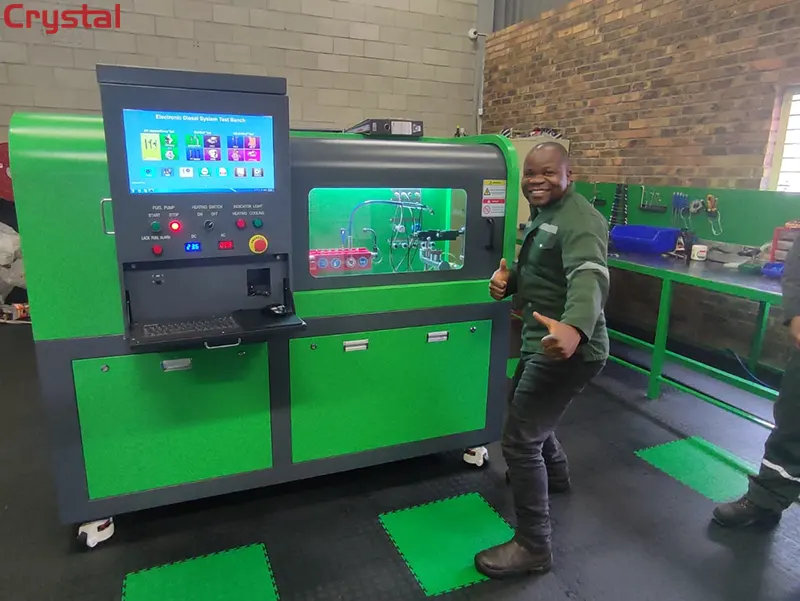
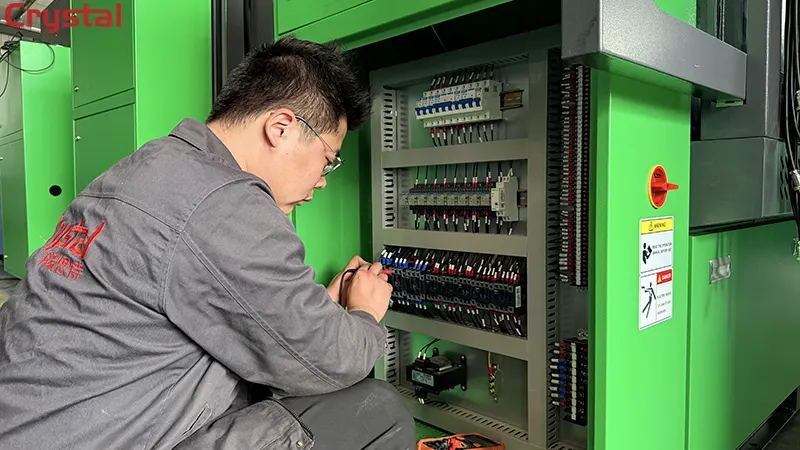
Recently, an HCR708 high-pressure common rail electronically controlled system comprehensive test bench was successfully installed and commissioned in Johannesburg, South Africa, and has officially entered into service. This equipment was acquired by a local specialized diesel engine repair service provider with years of industry experience; it will be utilized to support the inspection and repair of high-pressure common rail fuel systems for heavy-duty trucks, construction machinery, and agricultural equipment throughout Johannesburg and its surrounding regions. This marks a significant milestone in the strategic market expansion of the "Crystal" brand across the African continent, and also signals that high-end diesel diagnostic equipment from China is gaining recognition and trust within Africa's professional repair sector.
Market Drivers: Surging Demand for Diesel Engine Repair in South Africa
As the most mature automotive market on the African continent, South Africa boasts a highly developed automotive industry and a massive vehicle fleet. Data indicates that South Africa's total vehicle population now exceeds 12 million units. The volume of used car transactions is double that of new car sales, and a substantial number of older, pre-owned vehicles remain in active service. Consequently, the average vehicle age is relatively high, generating immense demand within the independent automotive aftermarket. In 2024, the size of South Africa's automotive aftermarket reached US$3.28 billion; this figure is projected to grow to US$5.55 billion by 2033, representing a Compound Annual Growth Rate (CAGR) of 5.39%.
Concurrently, as a major mining and logistics hub in Africa, South Africa sees diesel engines playing a dominant role across sectors such as mining machinery, heavy-duty trucking, and agricultural equipment. In 2024, sales of medium-duty commercial vehicles in South Africa saw a year-on-year increase of 10.2%. The continuous expansion of the commercial vehicle fleet places increasingly high demands on repair and maintenance service capabilities. Furthermore, South Africa's challenging driving environments—characterized by long-distance gravel roads and off-road terrain—inflict significant wear and tear on vehicle components such as suspension systems and tires, thereby further driving up the frequency of repair requirements. Industry analysis suggests that the size of the African automotive aftermarket will reach approximately US$500 billion by 2025, with projections indicating it will hit US$800 billion by 2030; within this market, repair and maintenance services constitute one of the core segments.
The purchaser in this instance is based in Johannesburg—South Africa's economic epicenter and a major transportation hub—and specializes in the repair and maintenance of diesel systems for heavy-duty trucks, mining machinery, and agricultural equipment. As their business volume continued to expand, their existing diagnostic equipment gradually proved insufficient to meet the diverse range of repair requirements in terms of both testing precision and operational scope. Following extensive market research and a technical comparison across multiple brands, the client ultimately selected and acquired the Crystal HCR708 Comprehensive Test Bench.
HCR708: A One-Stop Comprehensive Diagnostic Solution for High-Pressure Common Rail Electronic Control Systems
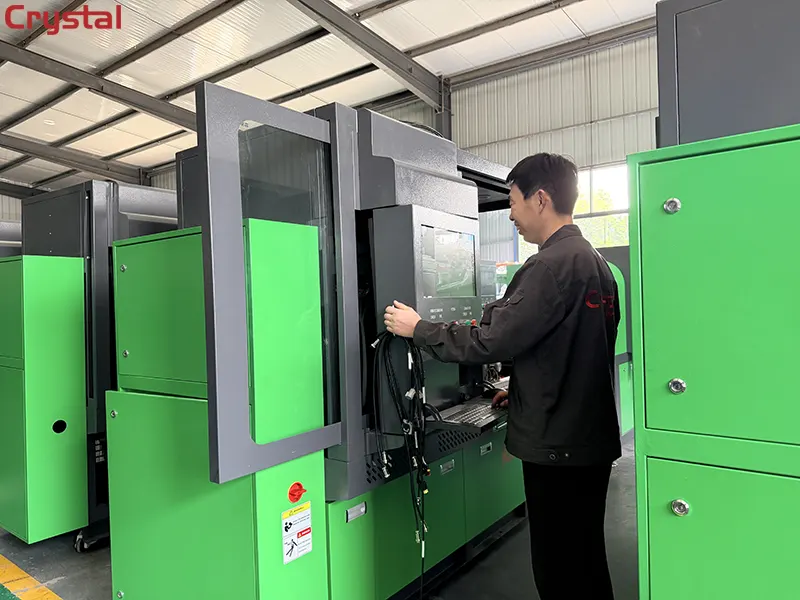
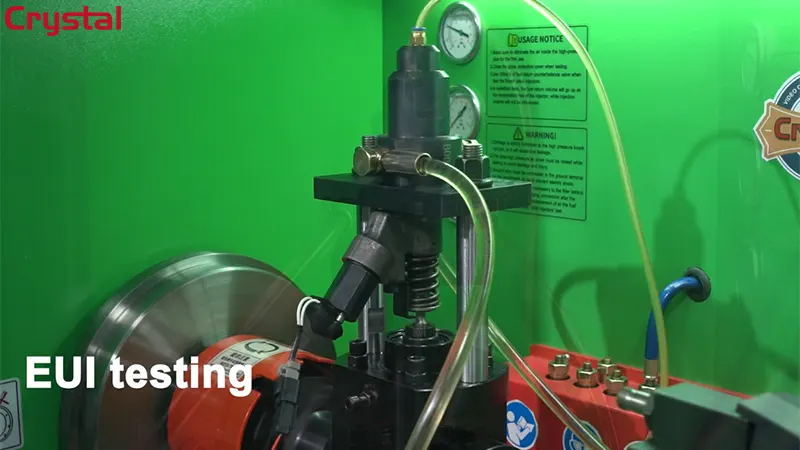
The HCR708 Comprehensive Test Bench for high-pressure common rail electronic control systems features a fully automated control system, enabling the convenient testing and servicing of electronically controlled common rail injectors (including piezoelectric types), high-pressure electronically controlled common rail pumps, electronically controlled unit pumps, and electronically controlled unit injectors. This equipment is capable of testing thousands of models of electronically controlled injectors and high-pressure common rail pumps—including those from Bosch, Delphi, Denso, Siemens, Caterpillar, and Cummins (Dongfeng Cummins, Foton Cummins)—providing a complete suite of test data.
In terms of testing precision, the HCR708 can accurately and automatically measure key parameters for electronically controlled common rail injectors, such as high-pressure sealing integrity, full-load injection volume, return flow volume, emission-point injection volume, idle-speed injection volume, pre-injection volume, and pre-injection return flow volume. The device can automatically generate fuel quantity correction codes for these injectors—including QR, IQA, IMA, ISA, c2i, c3i, and (VDO) ICC—facilitating rapid matching and adjustment by maintenance personnel.
Regarding high-pressure common rail pump testing, the HCR708 can precisely assess the high-pressure fuel supply capacity of electronically controlled pumps; the pressure regulation characteristics of low-pressure inlet metering valves and high-pressure proportional control valves (PCVs)—such as those found in HP0 and 320D systems; and parameters such as the suction capability and supply pressure of the transfer pump integrated within the high-pressure common rail pump itself.
Furthermore, the HCR708 supports a wide range of additional functions, including tests for injector solenoid armature lift, opening pressure, opening pulse width, response time, as well as solenoid resistance and inductance values. Test procedures can be customized according to specific requirements; the system automatically generates comprehensive test data reports and can simultaneously display up to six sets of data, thereby facilitating convenient data comparison. The device's internal computer system stores standard data for over 3,000 types of electronically controlled common rail injectors and high-pressure electronically controlled common rail pumps.
In terms of hardware configuration, the HCR708 is equipped with a high-precision fuel volume measurement system utilizing a high-precision gear flow meter, ensuring accurate and reliable test results. The unit features a proprietary control system for electronically controlled common rail injectors and high-pressure pumps, offering functions such as remote control, remote service support, free software upgrades, and Wi-Fi connectivity—providing immense convenience for future equipment maintenance and technical enhancements. Key components include Bosch rail pressure sensors, Bosch common rails, and Bosch high-pressure proportional control valves (DRV valves). Both the low-pressure fuel supply and measurement circuits are fitted with dual-stage filtration systems—featuring a filtration precision of 3–5μm—to ensure the cleanliness of the test fluid and the long-term stable operation of the equipment.
Regarding technical specifications, the HCR708 operates on a power supply of 380V AC (220V AC optional) at a frequency of 50Hz/60Hz, driven by a main motor with an output of 11KW or 15KW. The automatic test fluid temperature control system, comprising a heater and a forced-circulation air-cooling unit, maintains the fluid temperature at 40±2oC. The equipment is designed for operation in ambient temperatures not exceeding 35oC.
Broad Prospects for Sino-African Cooperation in the Automotive Aftermarket
South Africa is not only the largest automotive market on the African continent but is also hailed as the "Detroit of Africa," with its automotive industry occupying a pivotal position within its national economy and across the entire African region. Home to complete vehicle manufacturing plants for numerous brands—including Toyota, Volkswagen, Mercedes-Benz, BMW, and Ford—South Africa has fostered a vast and mature supply chain for automotive components. Furthermore, as a key member of the Southern African Development Community (SADC) and the African Continental Free Trade Area (AfCFTA), South Africa enjoys preferential tariff treatment that extends to other African nations, positioning it as a vital trade hub and distribution center for accessing the entire African market.
In recent years, cooperation between China and South Africa within the automotive sector has deepened continuously. In 2025, the total import and export volume between Liuzhou (China) and South Africa reached 1.29 billion RMB—a year-on-year increase of 110.5%—demonstrating strong export momentum for key product categories such as construction machinery, new energy vehicles, and automotive components. Automechanika Johannesburg—the International Trade Fair for Automotive Parts and Aftermarket Services in Johannesburg, South Africa—has emerged as a vital trade platform for Chinese enterprises seeking to enter the African market. The 2025 edition of the exhibition attracted a total of 830 exhibitors, over 550 of whom were international participants hailing from 28 countries and regions, and drew a professional audience of 21,800 visitors.
Concurrently, the South African government is vigorously advancing a localization strategy for its automotive industry, aiming to achieve a localization rate of 60% and an annual production volume of approximately 1.39 million units by 2035. Chinese automotive brands, such as Chery, have already begun establishing local production footprints in South Africa; this development has created a significantly broader market landscape for Chinese automotive aftermarket equipment suppliers—including Crystal Automation.
Deepening Roots in the African Market: Expanding Brand Influence
Established in 2012, Taian Crystal Automation Co., Ltd. is a comprehensive enterprise dedicated to the R&D, manufacturing, and sales of automated equipment—specifically focusing on internal combustion engine testing systems and common rail diagnostic equipment. The company’s product portfolio encompasses a range of series, including high-pressure common rail test benches and wheel hub repair equipment, serving sectors such as automotive maintenance, parts processing, and scientific research institutions. As of 2024, the company holds 25 patents, and its products are distributed through overseas agents to over 100 countries and regions worldwide.
A representative from Crystal Automation stated: "The African market holds immense potential; South Africa, in particular—as the most mature automotive market on the continent—demonstrates a continuously growing demand for high-quality diesel diagnostic equipment. Our HCR708 comprehensive test bench offers extensive testing capabilities; a single unit can fulfill the diagnostic requirements for a wide array of fuel system components—including injectors, high-pressure common rail pumps, electronically controlled unit pumps, and electronically controlled pump nozzles—thereby effectively assisting local repair enterprises in enhancing their technical proficiency and service efficiency. We remain steadfast in our commitment to a 'Quality First, Service First' philosophy, striving to provide superior diagnostic solutions to the global diesel maintenance industry."
The successful deployment of the HCR708 comprehensive test bench in Johannesburg, South Africa, has not only infused the local diesel maintenance sector with fresh technological vitality but has also served as a successful paradigm for other Chinese enterprises seeking to penetrate the African market. As economic and trade cooperation between China and Africa continues to deepen—and as the "Belt and Road Initiative" advances further—"Intelligent Manufacturing in China" is poised to embrace even broader prospects for development across the African continent.
Written by
Taian Crystal Automation Co., Ltd.
Editor Chen
www.crystalautotest.com
WhatsApp:+86 185 9528 8526
Email:martin@crystaltestbench.com
- Silk Road Bonds, Synchronized Progress - Kazakh and Serbian Customers Visit on the Same Day, Both Sign Contracts for CR818 Comprehensive Test Rig
- HCR918 Multi-functional Common Rail Test Bench Goes Operational in Ecuador
- Mexican Client Orders CR318Pro Test Bench-Made in China Boosts the Upgrading of Latin America's Diesel Repair Industry
- 7 Essential Basic Maintenance Items for Common Rail Injector Test Benches

Crystal Automation is a leading Chinese manufacturer of common rail test benches and fuel injector test benches.