7 Essential Basic Maintenance Items for Common Rail Injector Test Benches
The common rail injector test bench serves as the core equipment for the inspection, repair, and calibration of high-pressure common rail systems. Its testing precision and operational stability directly impact the quality of injector tuning and overall engine performance. Since the test bench operates continuously under conditions of high fuel pressure and high-frequency usage, issues such as fuel contamination, mechanical wear, and electrical drift can gradually accumulate, potentially leading to deviations in test data or even equipment failure. Therefore, establishing and strictly adhering to a systematic maintenance plan is of paramount importance. The seven essential basic maintenance items summarized below cover critical aspects-including the fuel system, standard component calibration, electrical controls, mechanical lubrication, cleanliness management, safe operation, and long-term storage-and serve as the fundamental guidelines for ensuring the test bench remains in optimal technical condition and enjoys an extended service life.
1. Hydraulic Fluid Inspection and Replacement
- 1.1. Fluid Level Check: Maintain the fluid level within the 1/2 to 2/3 range of the tank's scale markings; if the level drops below the lower limit, immediately replenish with the specific hydraulic fluid of the same type.
- 1.2. Fluid Quality Testing: Conduct a fluid sample analysis every 300 hours of operation to verify that the contamination level is <= NAS Class 8 and the moisture content is < 0.05%.
- 1.3. Replacement Interval: Under standard operating conditions, replace the fluid every 800 hours or every 6 months; in environments with high dust levels or high-frequency usage, shorten the interval to 500 hours, and simultaneously clean any accumulated impurities from the bottom of the hydraulic tank.
2. Periodic Replacement of High-Precision Filter Elements
- 2.1. High-Pressure Filter Element: Features a filtration precision of 10μm and a service life of 300 hours; mandatory replacement is required if the differential pressure reaches or exceeds 0.35MPa.
- 2.2. Low-Pressure Suction Filter Element: Features a filtration precision of 25μm; clean every 200 hours of operation and replace every 400 hours.
- 2.3. Oil-Water Separator Filter Element: Drain accumulated water weekly; replace the element after a cumulative operating time of 250 hours to prevent moisture from entering the common rail fuel circuit.
3. System Pressure Calibration and Seal Integrity Testing
- 3.1. Rail Pressure Accuracy Verification: Conduct multi-stage testing under both no-load and load conditions; the deviation between the actual rail pressure and the set value must remain within ±0.5MPa. If the deviation exceeds this tolerance, recalibrate the pressure sensors.
- 3.2. Piping Seal Testing: Static pressure holding at 15 MPa; pressure maintained for 30 minutes with a pressure drop of <= 0.2 MPa; no signs of leakage or oil seepage.
- 3.3. Pressure Regulation Valve Maintenance: Disassemble and clean every 4 months to remove oil sludge and carbon deposits, ensuring a pressure regulation response time of < 0.1 s.
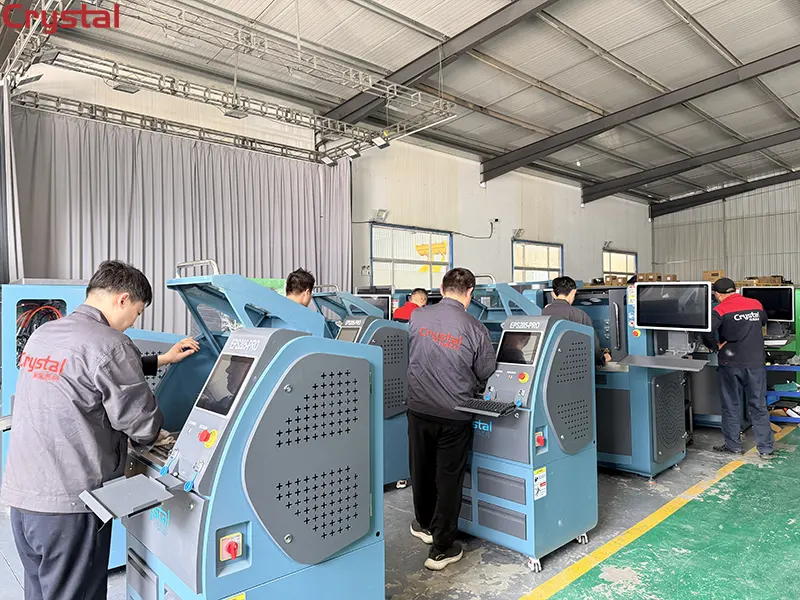
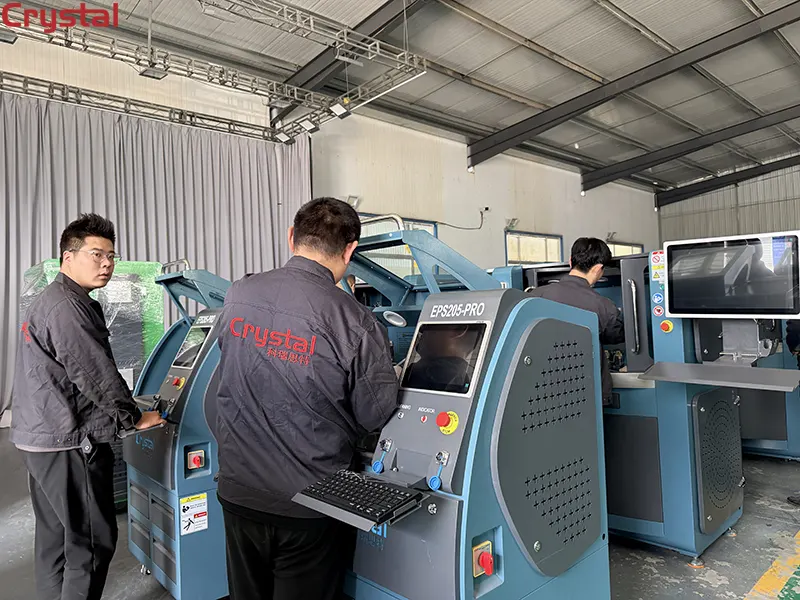
4. Temperature Control System Maintenance and Calibration
- 4.1. Operating Oil Temperature Control: During normal testing, the oil temperature must remain stable between 40oC and 45oC; the temperature control instrument error must be <= ±1oC.
- 4.2. Heat Dissipation Component Cleaning: Clean dust and oil residue from the cooler and cooling fans monthly; perform maintenance or repairs if heat dissipation efficiency drops by more than 10%.
- 4.3. Antifreeze/Cooling Medium: Replace annually to prevent overheating (boiling) at high temperatures and pipe cracking due to freezing at low temperatures.
5. Circuit and Sensor Inspection
- 5.1. Wiring Insulation Testing: The insulation resistance of the entire machine's wiring must be >= 20 Mohm; ensure all wiring terminals are securely fastened, with no signs of oxidation, looseness, or insulation aging/damage.
- 5.2. Core Sensor Calibration: Calibrate flow, pressure, and temperature sensors every 6 months; ensure signal output error is <= 1% FS (Full Scale).
- 5.3. Electrical Control System Dust Removal: Use compressed air to blow dust out of the control cabinet and PLC modules monthly; maintain ambient humidity between 40% and 60% to prevent moisture-induced short circuits on circuit boards.
6. Mechanical Transmission and Tooling Maintenance
- 6.1. Fixtures and Tooling: Inspect injector fixing clamps and joint sealing gaskets every 3 months; immediately replace if the wear on the sealing surface exceeds 0.1 mm.
- 6.2. Moving Parts Lubrication: Apply specialized grease weekly to adjustment guide rails and lifting mechanisms to ensure smooth operation without sticking or abnormal noises.
- 6.3. Worktable Precision Maintenance: Ensure the machine's levelness error is <= 0.02 mm/m; periodically adjust the leveling feet to prevent machine body deformation that could compromise testing accuracy.
7. Functional Self-Testing and Data Reset/Calibration
- 7.1. Whole-Machine No-Load Self-Test: Upon startup each day, run the machine under no-load conditions for 10 minutes; verify that there are no alarms or abnormal noises, and that the operating current remains stable within 85% to 95% of the rated value.
- 7.2. Test Data Calibration: Standard calibration injectors are utilized monthly to benchmark the system, ensuring that measurement errors for both injection volume and return flow volume are corrected to within <= ±1.5%.
- 7.3. System Dust and Contaminant Removal: Waste fluid generated during testing is collected promptly; the control console and waste fluid tank are cleaned daily to prevent contaminants from entering the oil circulation loop.
In summary, the seven fundamental maintenance items for the common rail injector test bench-ranging from fluid cleanliness and component calibration to electrical safety and rust-preventive storage-form a comprehensive, closed-loop maintenance system. Regularly executing these maintenance measures not only effectively prevents sudden malfunctions and reduces repair costs but also guarantees the repeatability and consistency of injector testing, thereby providing reliable data support for the precision repair of diesel engine high-pressure common rail systems. Operators are advised to establish a maintenance logbook and strictly implement these procedures item by item, in accordance with the scheduled intervals specified in the equipment manual, to ensure the test bench remains in optimal working condition at all times.
Written by
Taian Crystal Automation Co., Ltd.
Editor Chen
www.crystalautotest.com
WhatsApp:+86 185 9528 8526
Email:martin@crystaltestbench.com
- Two CR318Pro Common Rail Injector Test Bench Shipped Simultaneously to Italy - Made in China Earns Dual Recognition in the European Market
- HCR918 Multi-functional Common Rail Test Bench Goes Operational in Ecuador
- Chinese Smart Manufacturing Shines in Europe! HCR708 Multi-functional Common Rail Test Bench Successfully Delivered to Italian Customer.
- HCR708 Comprehensive Test Bench Enters South African Market---Injecting New Momentum into Africa Diesel Repair Industry

Crystal Automation is a leading Chinese manufacturer of common rail test benches and fuel injector test benches.