7 Key Precautions for the Operation and Use of Common Rail Injector Test Benches
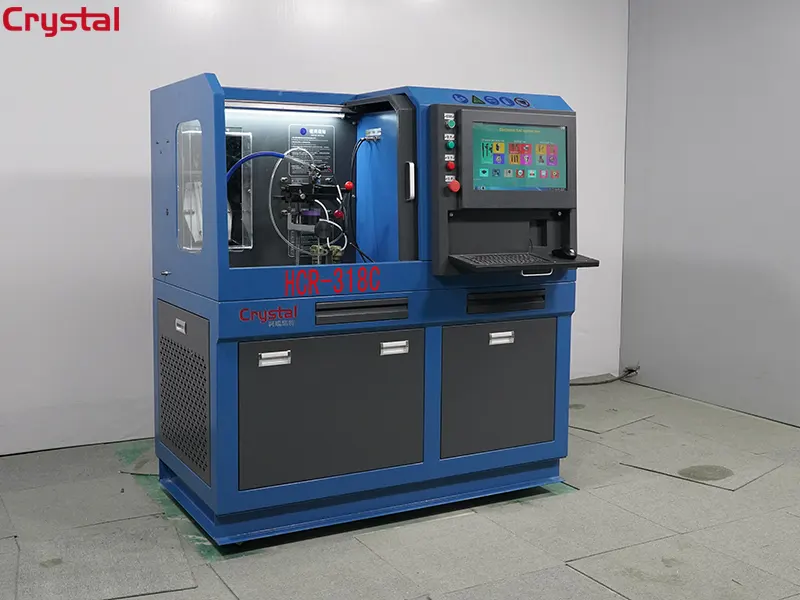
As is well known, a common rail injector test bench is a type of precision instrument; therefore, it requires exceptional care and caution during operation. Once the test program has commenced, if external factors cause the process to terminate prematurely, the entire batch of finished products may require rework. This not only increases production costs but can also inflict damage upon the equipment itself. Below, we outline seven specific precautions to observe when operating a common rail injector test bench.
1. Safety Operation Guidelines
1.1. Pre-Startup Checks
- Verify that the emergency stop switch is functional, the speed control knob is set to zero, and the high-pressure lines are free of looseness or damage.
- The equipment must be reliably grounded and connected to a dedicated voltage stabilizer to prevent electrical leakage and interference.
- High-pressure protective shields must be installed in the testing area; standing on either side of the universal joint or the graduated dial is strictly prohibited.
1.2. Operation and Shutdown
- Before starting the main motor, engage the fuel cutoff lever to ensure a low-load startup.
- Operating under excessive pressure, at excessive speeds, or at high speeds for prolonged periods is strictly prohibited; immediately reduce speed and shut down the machine once testing is complete.
- Shutdown Procedure: Rail pressure < 20 MPa --> Speed reduced to zero --> Pressure relieved and power cut off --> Injector removed.
1.3. Personnel Requirements
- Operation must be performed by designated, certified personnel; operators must not leave their post while the machine is running.
- Protective eyewear must be worn; touching electrical components with wet hands is strictly prohibited.
2. Fuel System Management
2.1. Fuel Standards
- Only GB/T 8029 calibration fluid or clean diesel fuel meeting relevant standards may be used.
- Replace the fuel with fresh fluid every 800 operating hours or after testing 500 injectors to prevent abrasive wear caused by impurities.
2.2. Fuel Lines and Filtration
- Prior to each startup, purge air from the system and check for leaks; keep your hand on the low-pressure fuel pump start button while activating it.
- Clean the coarse filter every 800 hours; replace the fine filter weekly or after every 20 test cycles.
- Regularly inspect connectors, seals, and O-rings to prevent fuel leaks and air ingress into the system.
2.3. Pressure Control
- It is strictly prohibited to start the main motor when the pressure is low (< 0.2 MPa).
- Do not apply excessive force to the pressure regulating valve after it has been screwed down to its limit; doing so may cause damage.
3. Precise Temperature Control
- Standard Test Oil Temperature: 40oC ± 2oC.
- Handling of Temperature Anomalies: If the temperature is too low, the fuel viscosity will be high and the injection volume will be reduced; if the temperature is too high (e.g., exceeding 70oC), immediately shut down the equipment to prevent damage to seals and components.
- Regularly maintain the temperature control system and cooling water circuits to ensure stability.
4. Installation and Sealing
4.1. Injector Installation
- Ensure connectors are clean and free of impurities; if necessary, perform ultrasonic cleaning before testing.
- Apply appropriate tightening torque: overtightening may distort the valve body, while insufficient tightening may result in oil leakage.
- Strictly avoid short circuits in the drive clamps; do not hot-plug or hot-swap ECU communication cables.
4.2. High-Pressure Lines
- Use specialized high-pressure fuel lines; regularly inspect them for cracks or bulges.
- Ensure connections are secure and properly supported to prevent vibration-induced fatigue.
5. Electrical and Control Systems
- Electrical Connections: Regularly inspect sensors, wiring harnesses, and connectors to ensure they are free of looseness or oxidation.
- System Calibration: Calibrate pressure sensors monthly; periodically verify flow measurement and control algorithms; keep firmware and software up to date.
- Fault Handling: Immediately shut down the equipment in the event of abnormal noises, overheating, or alarms; do not operate the equipment while it is in a faulty condition.
6. Cleaning and Maintenance
6.1. Daily Cleaning
- Wipe away oil residue after testing; keep the work surface, oil collector, and connectors clean.
- Periodically disassemble and clean internal oil passages, nozzles, and valve assemblies.
6.2. Routine Maintenance
- Lubricate moving parts (guide rails, couplings) at regular intervals.
- Replace seals and consumable parts according to the prescribed maintenance schedule.
- Perform a professional calibration of the entire machine annually; for equipment under high-load operation, perform this calibration every six months.
7. High-Pressure Safety and Emergency Procedures
- Pressure Range: Do not exceed the equipment's rated pressure; use only approved pressure-bearing components.
- Pressure Relief Principle: Always relieve pressure before disassembling or assembling components; strictly prohibit maintenance work within the high-pressure zone while the system remains under pressure.
- Emergency Measures: In the event of a leak, immediately shut down the equipment, relieve pressure, ensure ventilation, and strictly prohibit open flames. In the event of an electrical fault, disconnect the main power supply before attempting any repairs. Should any personnel injury occur, administer emergency aid immediately and report the incident for repair assistance.
Conclusion
- 1. Safety First: Comprehensive risk control for high pressure, high temperature, and electrical hazards throughout the entire process.
- 2. Cleanliness and Precision: Ensure clean oil, accurate temperature control, stable pressure, and effective sealing.
- 3. Standardized Operation: Adhere to established procedures, avoid overloading, perform frequent maintenance, and conduct regular calibration.
Operating a common rail injector test bench requires strict adherence to principles of safety, precision, and standardization. The seven core precautions outlined here—covering safe operation, oil circuit control, temperature management, precision assurance, electrical maintenance, cleaning and upkeep, and high-pressure protection—directly impact the equipment's service life, testing accuracy, and personnel safety. The above constitutes our shared guidance on the seven key precautions for operating a common rail injector test bench; we hope this proves helpful to you. Taian Crystal Automation Co., Ltd. possesses highly professional operational protocols for common rail injector testing; should you have any requirements or inquiries, please feel free to contact us at any time at +86 185 9528 8526.
Written by
Taian Crystal Automation Co., Ltd.
Editor Chen
www.crystalautotest.com
WhatsApp:+86 185 9528 8526
Email:martin@crystaltestbench.com
- Chinese Smart Manufacturing Shines in Europe! HCR708 Multi-functional Common Rail Test Bench Successfully Delivered to Italian Customer.
- HCR708 Comprehensive Test Bench Enters South African Market---Injecting New Momentum into Africa Diesel Repair Industry
- Mexican Client Orders CR318Pro Test Bench-Made in China Boosts the Upgrading of Latin America's Diesel Repair Industry
- 7 Essential Basic Maintenance Items for Common Rail Injector Test Benches

Crystal Automation is a leading Chinese manufacturer of common rail test benches and fuel injector test benches.