Top 5 Injection Pump Test Bench Market Trends Driving 5.7% CAGR Through 2031
The global injection pump test bench market is undergoing a structural transformation. What was once a niche segment of diesel workshop equipment has evolved into a technology-driven industry shaped by tightening emissions regulations, the rapid adoption of ultra-high-pressure common rail systems, and the integration of artificial intelligence into diagnostic processes.
The broader fuel system testing market—which encompasses injection pump test benches along with injector testing, fuel pump validation, and common rail system diagnostics—is projected to grow from USD 1,232 million in 2025 to USD 2,098 million by 2032, representing a CAGR of 7.6%. The diesel test kits segment alone reached USD 494 million in 2024 and is forecast to hit USD 748 million by 2031 at a CAGR of 6.1%. Within this expanding ecosystem, the injection pump test bench market is being reshaped by five defining trends.
Here are the top 5 trends driving the market's 5.7% CAGR through 2031—and what they mean for workshops, manufacturers, and equipment suppliers.
Trend 1: Ultra-High-Pressure Testing Demand Exceeding 2,500 Bar
The single most powerful force reshaping the injection pump test bench market is the relentless increase in diesel injection pressures. Injection pressures have progressed from 1,350 bar in first-generation common rail systems (introduced in 1997) to 2,500 bar in today's fourth-generation systems—with 3,000 bar designs already under development for heavy-duty applications.
This progression is not incremental—it is transformative. As emission standards become increasingly stringent, market demand is surging for testing solutions that support ultra-high pressures exceeding 2,500 bar and provide high-precision diagnostics for piezoelectric injectors. An injection pump test bench capped at 1,800 bar—typical of entry-level equipment—simply cannot validate the performance of modern pumps at the pressures where they actually operate.
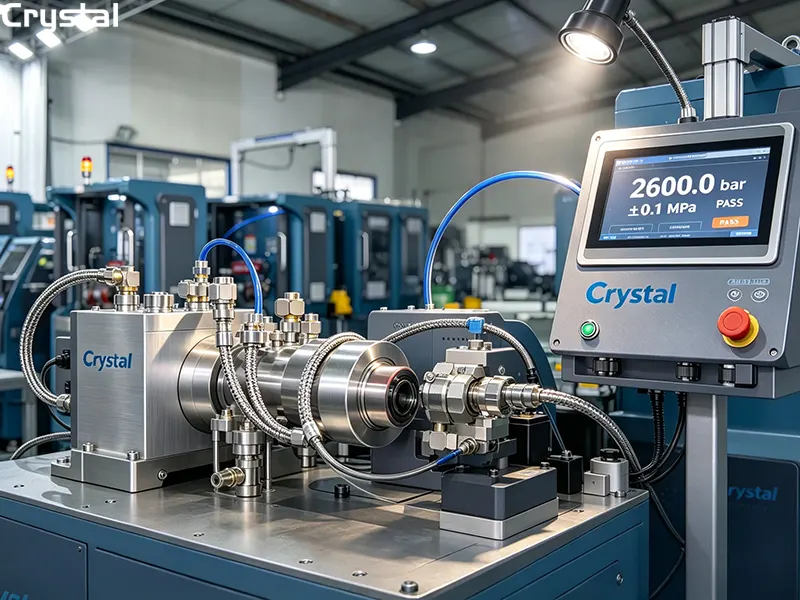
The implications for the market are direct: test bench manufacturers that cannot deliver 2,600 bar and beyond with pressure control accuracy of ±0.1 MPa will find themselves increasingly excluded from the high-value segments of the market—heavy-duty trucks, marine engines, and industrial power generation. The shift toward higher pressures is also driving demand for piezoelectric injector testing capability, which requires specialized electrical verification including capacitance measurement (0–12 μF) and response time analysis (0–999 μS).
Crystal Advantage: Crystal's high-pressure common rail test benches operate at pressures up to 2,600 bar with pressure control accuracy of ±0.1 MPa, powered by Bosch CP3.3 original common rail pumps. This pressure capability ensures compatibility with current and emerging common rail systems.
Trend 2: AI and Machine Learning Integration in Diagnostic Systems
Artificial intelligence is no longer a futuristic concept in diesel diagnostics—it is an active market driver. Research has demonstrated that AI-based diagnostic methods can achieve accuracy rates exceeding 95% in detecting plunger cracks and leaks in high-pressure common rail systems. Artificial Neural Network (ANN) models are being developed to predict injection flow rate based on experimental data collected from common rail injector test benches with integrated temperature control.
The impact on the injection pump test bench market is multi-faceted:
Predictive maintenance capability: AI-enabled test benches can identify degradation patterns in pump components before they cause catastrophic failure, allowing workshops to schedule maintenance during planned downtime rather than responding to emergency breakdowns.
Automated fault classification: Instead of relying on technician experience to interpret test results, AI-driven systems automatically classify failures by type and severity, reducing diagnostic time and minimizing human error.
Continuous learning: Modern test benches with integrated data logging generate thousands of test data points daily. Machine learning algorithms applied to this data continuously improve diagnostic accuracy over time.
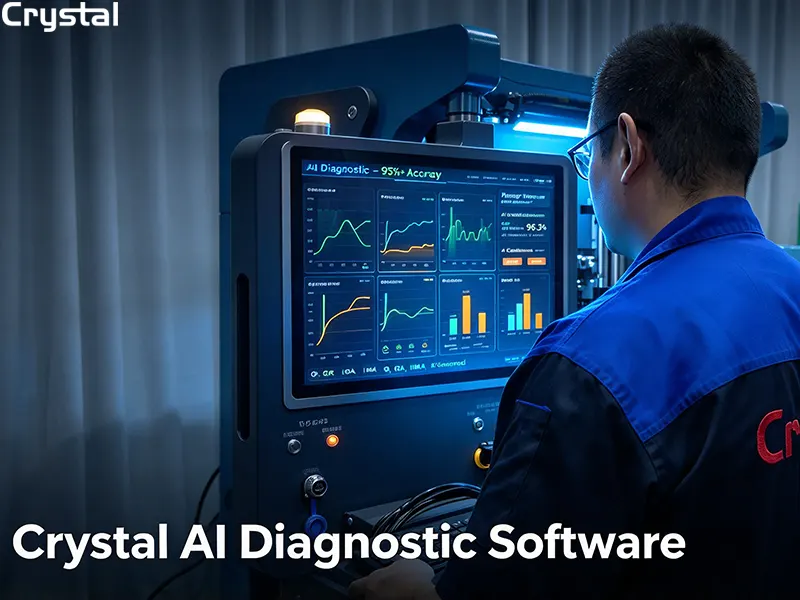
The broader fuel system testing market is already reflecting this shift. Testing is expanding from basic flow detection to injection pressure, injection quantity consistency, response time, atomization performance, and durability verification—capabilities that demand AI-assisted analysis to manage effectively.
Crystal Advantage: Crystal's CRS1000 series and CR918-PRO test benches feature intelligent control systems with automated test sequences, one-click cleaning, and comprehensive data logging. The built-in industrial computer system with 17-inch color LCD touch screen displays up to 6 test data sets simultaneously, enabling data-driven diagnostics.
Trend 3: Asia-Pacific as the Fastest-Growing Regional Market
The geographic center of gravity for the injection pump test bench market is shifting decisively toward Asia-Pacific. The region commanded 37.81% of global test bench market value in 2024 and is set to grow at a CAGR of 9.25% —the fastest regional pace through 2030. In the broader automotive testing equipment market, Asia-Pacific held a 56.09% share in 2025.
Several factors are driving this regional growth:
Vehicle production concentration: More than 90% of global vehicle production is concentrated in Asia, Europe, and North America, with Asia alone accounting for 56%. China is the world's largest vehicle producer, contributing approximately 32% of global output. This concentration of manufacturing drives demand for testing equipment at both OEM and aftermarket levels.
Fleet modernization: Rapid fleet expansion and modernization in China, India, and Southeast Asia are creating a large installed base of modern diesel engines requiring precision diagnostics and calibration.
Aftermarket growth: As the vehicle fleet in Asia-Pacific matures, the aftermarket for diesel fuel system repair and calibration services is expanding rapidly, driving demand for injection pump test benches in independent workshops.
Government investment: Emissions regulations equivalent to Euro 6 and emerging Euro 7 standards are being adopted across Asia-Pacific, mandating higher testing precision and creating a replacement cycle for older test equipment.
Crystal Advantage: Crystal Automation's manufacturing base in Shandong, China, positions the company directly within the fastest-growing regional market. Crystal test benches are exported to more than 100 countries, with a strong presence in Asia-Pacific and expanding reach in Europe, North America, and the Middle East.
Trend 4: Modular Multi-Functional Test Bench Platforms
The fourth defining trend is the shift from single-purpose test benches to modular, multi-functional platforms that can be reconfigured to test different component types. This shift is driven by economics: workshops cannot afford to purchase separate machines for every pump family, injector brand, and system architecture they encounter.
The market is responding with platforms that support:
- Common rail injectors (solenoid and piezoelectric)
- High-pressure common rail pumps (Bosch CP1/CP3/CP4, Denso HP0–HP4, Delphi)
- HEUI injectors and pumps (CAT C7, C9, 3126, and Ford 6.0L/7.3L)
- EUI/EUP systems (with comprehensive adapter sets)
- Medium-pressure actuating pumps
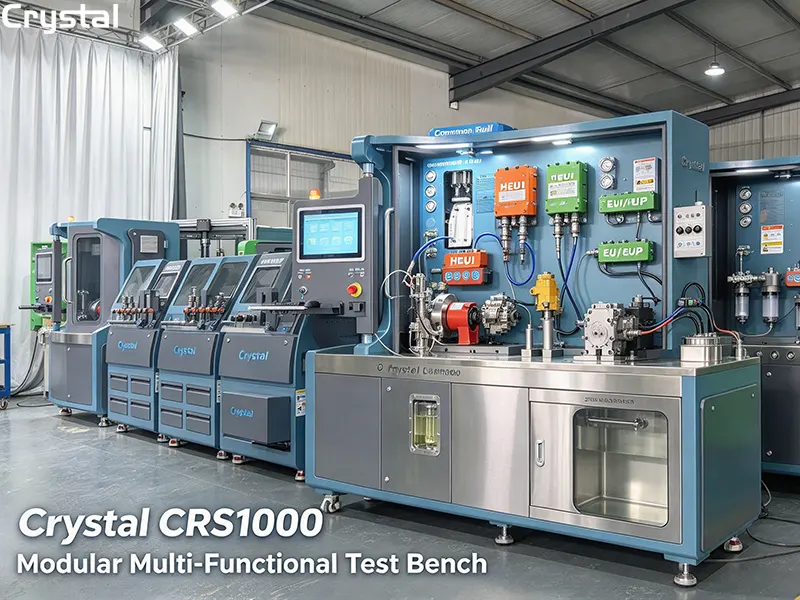
The Crystal CRS1000 series exemplifies this modular approach. Its modular design allows the bench to be configured for testing high-pressure common rail injectors, high-pressure common rail pumps, EUI and EUP systems, HEUI systems, and medium-pressure actuating pumps. Users can select a single testing function or combine two or even three functions in one system, making it a cost-effective and future-ready testing platform.
The economic logic is compelling. A workshop that would otherwise need to purchase three or four dedicated test benches can invest in a single modular platform that adapts to changing market demands. As one industry observer notes, this type of equipment is "more than just equipment; it is a business strategy"—one that eliminates rejected jobs and increases revenue potential.
Crystal Advantage: The Crystal CRS1000 series features a completely new streamlined layout with a rotating control panel for ergonomic operation. Both test and waste oil tanks are crafted from industrial-grade 304 stainless steel for maximum corrosion resistance, while all fluid lines incorporate a three-stage filtration system to prevent contamination.
Trend 5: Emission Regulation Compliance and Green Fuel Compatibility
The fifth major trend is the intersection of tightening emissions regulations and the emergence of alternative diesel fuels. This trend is reshaping both what test benches must measure and what fluids they must handle.
Regulatory drivers: Frameworks including Euro 7, China 6, US EPA Tier 5, and IMO fuel sulfur and NOx standards are accelerating investment in emissions-related testing. The commercial vehicle emission upgrading and heavy-duty machinery development sectors are driving iteration of high-pressure diesel common rail systems.
These regulations mandate precise fuel injection control to reduce NOx and particulate matter. Test benches must provide quantifiable, data-driven diagnostics with pass/fail results that can be traced and verified against OEM specifications.
Alternative fuel compatibility: The shift toward sustainable fuels is accelerating. Research increasingly focuses on biodiesel, HVO (Hydrotreated Vegetable Oil), and hydrogen blends. Engine bench tests are being conducted on common-rail diesel engines using B100 and B20 biodiesel blends to study effects on output power, fuel consumption, and emissions.
Test benches must be capable of handling fuels with different viscosities, lubricities, and corrosive properties. This requires advanced materials—such as 304 stainless steel fuel circuits—and precise temperature control systems that maintain calibration fluid at 40 ± 2°C regardless of fuel type.
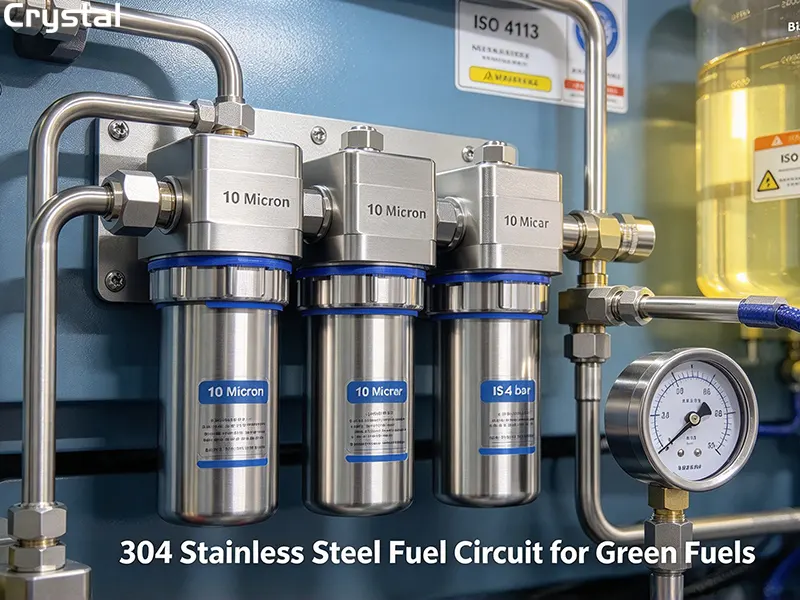
Crystal Advantage: Crystal test benches feature 304 stainless steel fuel circuits for corrosion resistance and durability, ensuring compatibility with biodiesel and alternative fuel blends. The three-stage filtration system with 10-micron high-pressure filtration prevents contamination regardless of fuel type.
Market Outlook: What the 5.7% CAGR Means for the Industry
The 5.7% CAGR projected for the injection pump test bench market through 2031 represents more than a growth statistic—it reflects a fundamental shift in what test benches must do and who needs them.
For workshops: The market growth signals expanding opportunities in diesel diagnostics and calibration services. As the installed base of modern common rail systems grows, the demand for precision testing increases proportionally. Workshops that invest in industrial-grade test benches now will be positioned to capture this growth.
For manufacturers: The market's expansion is not uniform. Growth is concentrated in high-pressure (2,500+ bar), modular, and AI-integrated platforms. Manufacturers that cannot deliver these capabilities will be increasingly marginalized. The competitive landscape is shifting from price-based competition to capability-based differentiation.
For equipment buyers: The 5.7% CAGR forecast suggests that waiting to purchase a test bench will not result in lower prices—it will result in higher costs as demand outstrips supply. Workshops planning to expand their diesel service capabilities should consider investment timing carefully.
Key market indicators to monitor:
| Indicator | Current Status | Implication |
|---|---|---|
| Pressure capability | 2,500 bar standard, 3,000 bar emerging | Entry-level 1,800 bar benches becoming obsolete |
| AI integration | 95%+ diagnostic accuracy demonstrated | AI-assisted diagnostics becoming competitive necessity |
| Regional growth | Asia-Pacific at 9.25% CAGR | Fastest-growing market for test bench sales |
| Modular platforms | Multi-function designs gaining share | Single-purpose benches losing competitiveness |
| Regulatory pressure | Euro 7, China 6, EPA Tier 5 | Compliance-driven replacement cycle accelerating |
The Crystal Automation Position
Crystal Automation is positioned at the intersection of these five trends. The company's test benches deliver:
- 2,600 bar pressure capability with ±0.1 MPa accuracy to meet ultra-high-pressure testing demands
- Multi-functional modular design supporting common rail injectors, pumps, HEUI, EUI/EUP, and more in a single platform
- 304 stainless steel fuel circuits with three-stage filtration for green fuel compatibility
- Intelligent control systems with automated test sequences, data logging, and comprehensive reporting
- Global presence with exports to more than 100 countries, including strong coverage in the fastest-growing Asia-Pacific region
Conclusion
As the injection pump test bench market expands through 2031, the equipment that succeeds will be the equipment that adapts—to higher pressures, to new fuel types, to smarter diagnostics, and to the evolving needs of workshops worldwide.
The 5.7% CAGR is not merely a number. It represents a clear signal: the injection pump test bench is no longer optional equipment—it is the foundation of modern diesel diagnostics. Workshops that invest in industrial-grade, multi-functional, AI-ready platforms today will be the ones positioned to capture the growth of tomorrow.
Written by
Taian Crystal Automation Co., Ltd.
Editor Chen
www.crystalautotest.com
WhatsApp:+86 185 9528 8526
Email:martin@crystalautotest.com
- Top 7 Common Rail Test Bench Trends: What's Driving Diesel Workshop Growth in 2026
- Top 9 Must-Know Injection Pump Test Bench Maintenance Tasks for Every Diesel Workshop
- The Nine Major Advantages of Using Electronic Speed Control on Common Rail Injector Test Benches
- Top 5 Must-Know Signs Your Injection Pump Test Bench Calibration Is Off

Crystal Automation is a leading Chinese manufacturer of common rail test benches and fuel injector test benches.