The 5 Signs Your Common Rail Test Bench Needs Calibration
A common rail test bench is a precision instrument. Its accuracy directly determines whether you diagnose an injector as "pass" or "fail"—and that decision can mean the difference between a reliable repair and a costly comeback.
But here's the challenge: test benches don't suddenly break. Their accuracy drifts gradually over time due to sensor aging, mechanical wear, thermal effects, and contamination. The drift is invisible—until it isn't.
Catching calibration drift early is critical. Here are 5 warning signs that your common rail test bench needs calibration—backed by hard numbers you can verify in your own workshop.
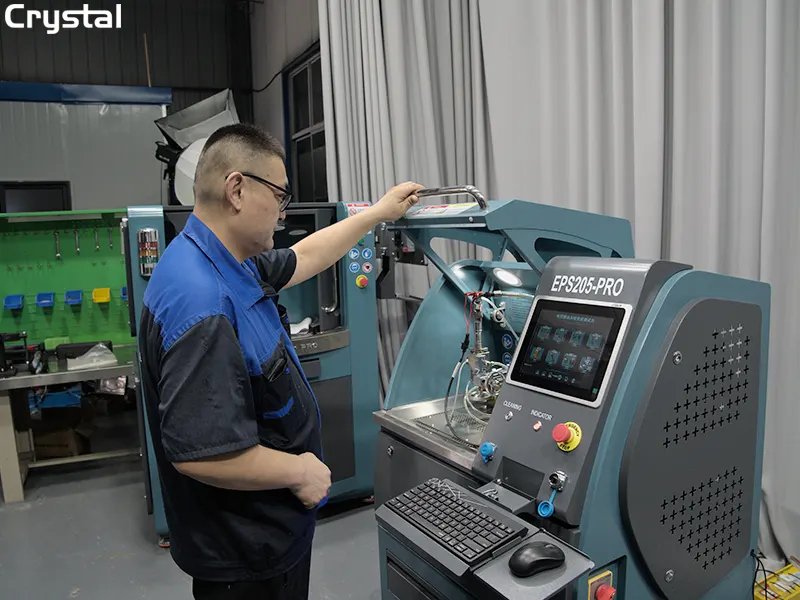
Sign 1: Pressure Control Accuracy Exceeds ±0.5 MPa
The most direct indicator of calibration drift is pressure control accuracy. Modern common rail test benches are designed to maintain rail pressure within tight tolerances. When those tolerances slip, every test result becomes suspect.
What to check: Initiate a no-load pressure test and compare the pressure gauge reading against the pressure sensor reading. If the deviation exceeds ±0.5 MPa (5 bar), immediate calibration is required.
The data: For a test bench operating at pressures up to 2,600 bar, a deviation of just 0.5 MPa represents less than 0.02% error. Yet even this tiny deviation can produce flow measurement errors of 0.5–1.0 ml per 1,000 injections—enough to turn a "passing" injector into one that causes rough idling, black smoke, or reduced power.
Why it matters: Pressure is the foundation of every other measurement. If pressure is wrong, flow rate, timing, and return flow measurements are all wrong. Calibrate pressure first.
Sign 2: Inconsistent Flow Rate Readings on Known-Good Injectors
Flow rate is the single most critical diagnostic parameter for any injector. A properly calibrated test bench should produce repeatable flow measurements within tolerance on the same injector, test after test.
What to check: Test a known-good reference injector—one that you trust and have historical data for. Run the same test sequence three times. Compare the results.
Red flags:
- Flow readings vary by more than 0.2 ml across repeated tests
- Flow readings no longer match historical baseline data for the same injector
- Different operators get different results on the same injector
The data: Modern test benches achieve flow measurement accuracy of 0.1 ml. If your bench is producing variations of 0.3 ml or more on a known-good injector, calibration drift is almost certainly the culprit.
Why it matters: Inconsistent readings destroy confidence in every test result. You can't trust a "pass" if the same injector might "fail" an hour later. Calibration restores repeatability.
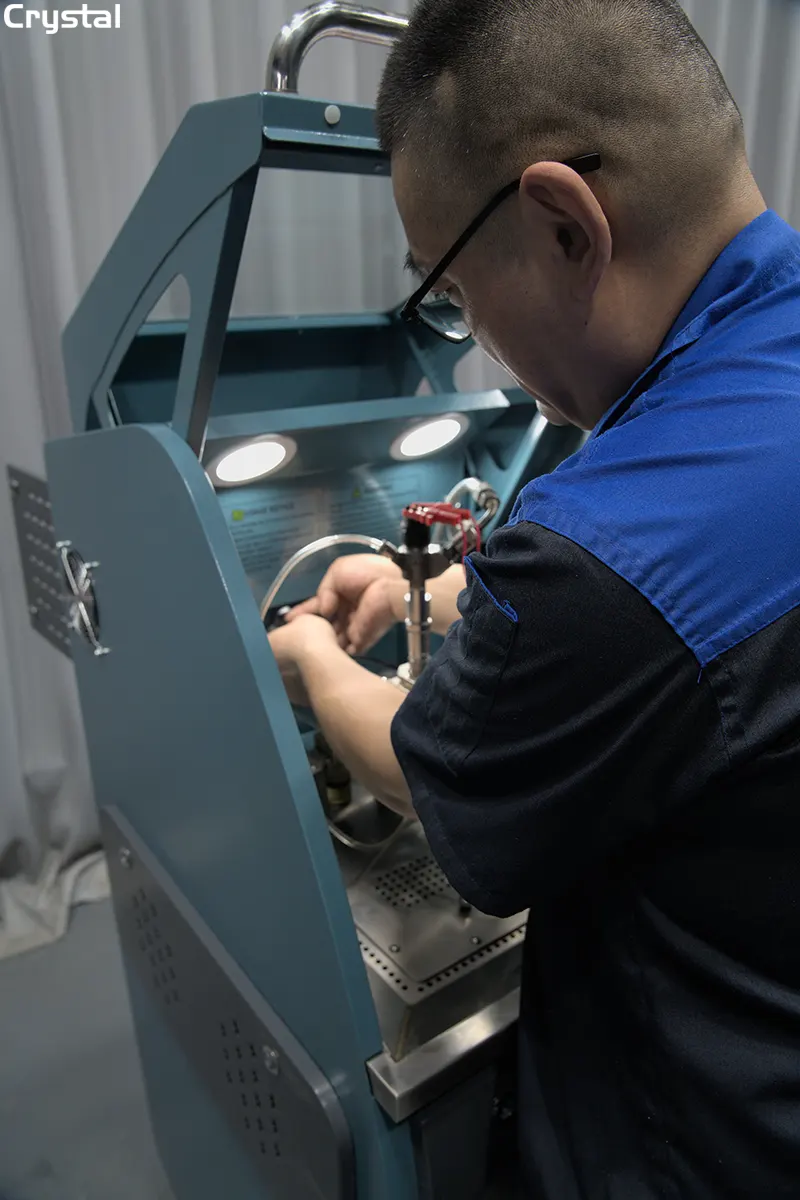
Sign 3: Calibration Codes Don't Match ECU Expectations
Modern common rail test benches automatically generate correction codes—QR, IQA, IMA, ISA, c2i, c3i, and ICC (VD0) —for ECU integration. These codes are calculated from precise flow and timing measurements.
What to check: After testing an injector and generating calibration codes, install that injector in an engine and monitor ECU feedback. If the ECU reports persistent correction values or trim errors, the calibration codes may be incorrect.
Red flags:
- Engine runs rough after installing "calibrated" injectors
- ECU fuel trims are consistently outside expected ranges
- Check engine light appears with fuel system-related codes
The data: Bosch testing has found that 70% of aftermarket diesel injectors fail comprehensive testing and would present significant engine performance issues if installed. While many of these failures are component defects, a significant portion stems from inaccurate calibration on poorly maintained test benches.
Why it matters: Calibration codes are only as good as the measurements that generate them. If your bench is out of calibration, every code you generate is wrong—and every engine you service pays the price.
Sign 4: Standard Injector Opening Pressure Drifts from 17.5+0.2 MPa
Standard injectors are the reference point for test bench calibration. Their opening pressure and flow uniformity serve as a baseline against which all other injectors are measured.
What to check: Use a PJ-40 calibrator (or equivalent) to periodically check your standard injectors. The standard opening pressure should be 17.5+0.2 MPa. If the opening pressure deviates beyond this range, or if flow uniformity between standard injectors is inconsistent, your test bench's calibration is suspect.
Red flags:
- Standard injector opening pressure is above 17.7 MPa or below 17.3 MPa
- Flow uniformity between standard injectors varies by more than 2%
- Standard injector readings change significantly over time without physical damage
Why it matters: Standard injectors are your "measuring stick." If the measuring stick is wrong, every measurement is wrong. When standard injector readings drift, it's a clear sign that the test bench's calibration has shifted—and it's time for professional recalibration.
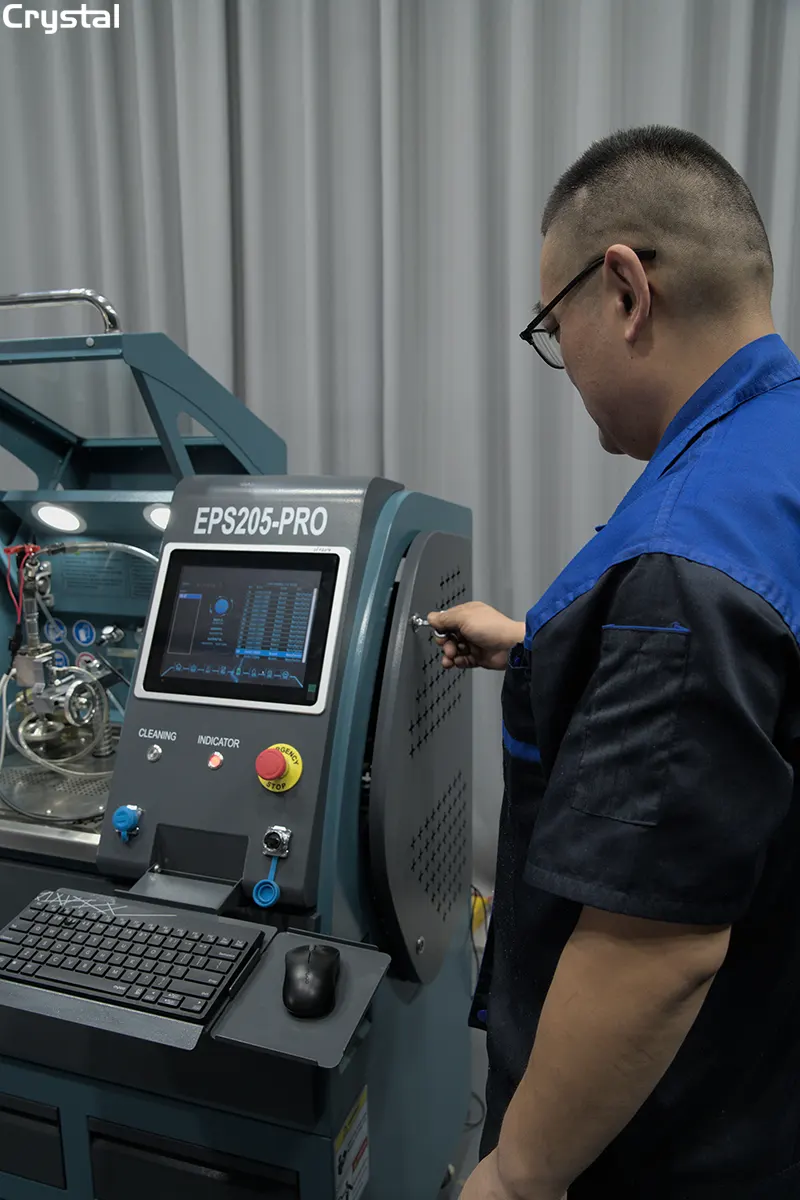
Sign 5: Unexplained Variations in Injector Test Results
Sometimes the signs are subtle. Injectors that previously passed now fail—or vice versa. Repeat tests on the same injector produce different results. And the pattern is inconsistent.
What to check: Review your test records. Look for patterns:
- Are injectors from the same brand/model showing wider-than-normal result variations?
- Are test results trending in one direction over time (e.g., flow rates gradually decreasing)?
- Are you seeing more "borderline" results that require subjective judgment?
Red flags:
- Pass/fail rates have changed significantly without changes in injector quality
- Results on the same injector vary by more than ±2% across repeated tests
- Technicians are increasingly "re-testing" injectors to confirm results
The data: Test benches are typically calibrated every 12 months under normal operation. However, high-volume workshops may require more frequent calibration—especially if they test injectors daily or handle multiple injector brands.
Why it matters: When test results become unpredictable, technician confidence erodes. They start second-guessing the equipment, re-testing components, and wasting valuable workshop time. Calibration restores consistency and confidence.
When to Calibrate: A Quick Reference Guide
| Sign | What to Check | Action Threshold |
| Pressure deviation | No-load pressure test | > ±0.5 MPa deviation |
| Flow inconsistency | Known-good reference injector | > 0.2 ml variation |
| Code mismatch | ECU feedback after install | Persistent fuel trim errors |
| Standard injector drift | PJ-40 calibrator check | Outside 17.5±0.2 MPa |
| Unexplained variations | Test record review | > ±2% variation |
The Crystal Automation Advantage
Crystal Automation's common rail test benches are engineered for precision and reliability—but even the best equipment requires regular calibration to maintain peak performance.
Crystal test benches feature:
- Built-in calibration verification for pressure and flow sensors
- Automated test sequences that reduce operator-dependent variation
- Comprehensive diagnostic software that flags calibration drift early
- Standard injector sets for routine accuracy verification
As one industry source notes: *"The test bench needs to be calibrated regularly to ensure that the test data it outputs is highly accurate"* . Calibration can be performed through standard samples or calibration equipment to ensure test accuracy for injectors, high-pressure pumps, and other critical components.
For workshops looking to maintain peak performance, Crystal recommends:
- Weekly pressure system verification (±0.5 MPa check)
- Monthly standard injector verification (17.5+0.2 MPa check)
- Annual professional calibration (or more frequently for high-volume shops)
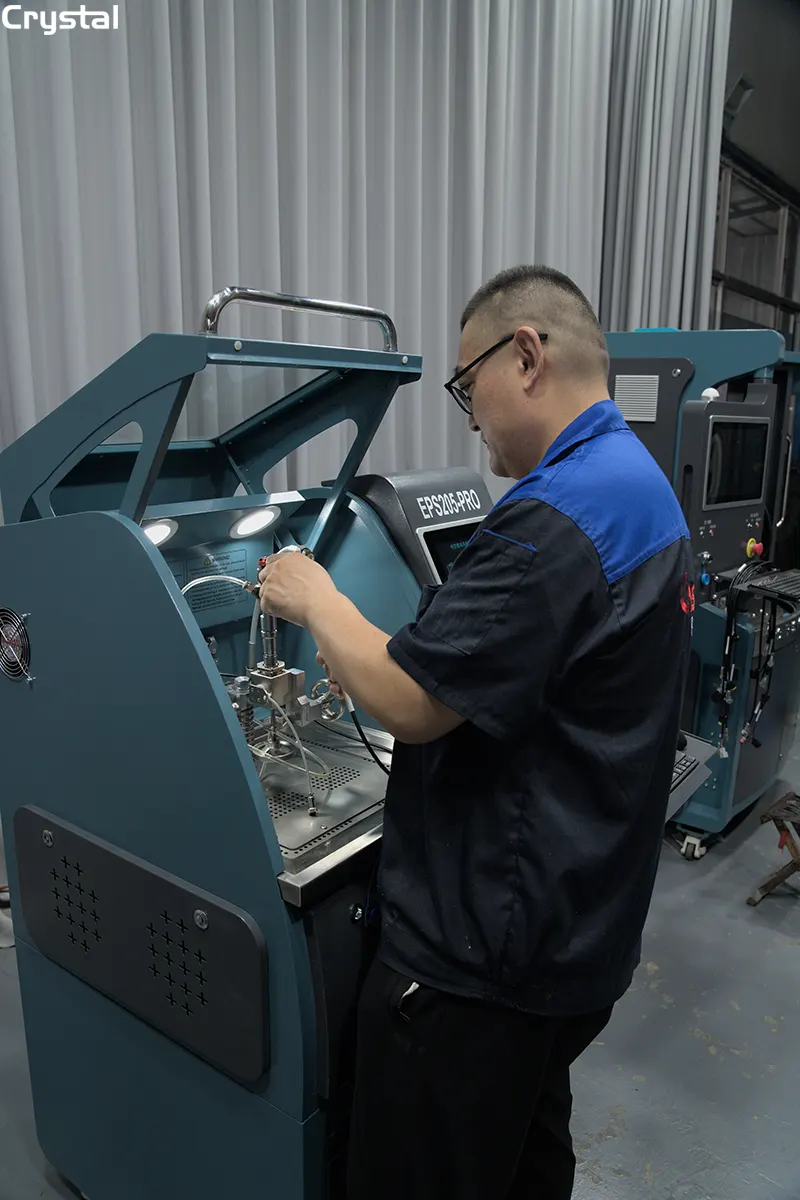
Conclusion
Calibration drift is inevitable. It's not a question of *if* your test bench will drift—it's a question of *when*. The key is catching it early, before inaccurate results lead to misdiagnosed injectors, wasted workshop time, and costly engine failures.
These 5 warning signs give you a practical framework for monitoring your test bench's health. Verify them regularly. Track them systematically. And when you see the signs, calibrate immediately.
Because in diesel diagnostics, precision isn't optional—it's everything.
Written by
Taian Crystal Automation Co., Ltd.
Editor Chen
www.crystalautotest.com
WhatsApp:+86 185 9528 8526
Email:martin@crystalautotest.com
- Top 6 Factors That Determine Injection Pump Test Bench Total Cost of Ownership
- Best 7 Tools for Injection Pump Test Bench Maintenance – Essential for Every Diesel Technician
- Injection Pump Test Bench Setup: 6 Essential Steps Before Your First Test Run
- Common Rail Test Bench Calibration: Why Precision Matters for Pump and Injector Diagnostics

Crystal Automation is a leading Chinese manufacturer of common rail test benches and fuel injector test benches.